
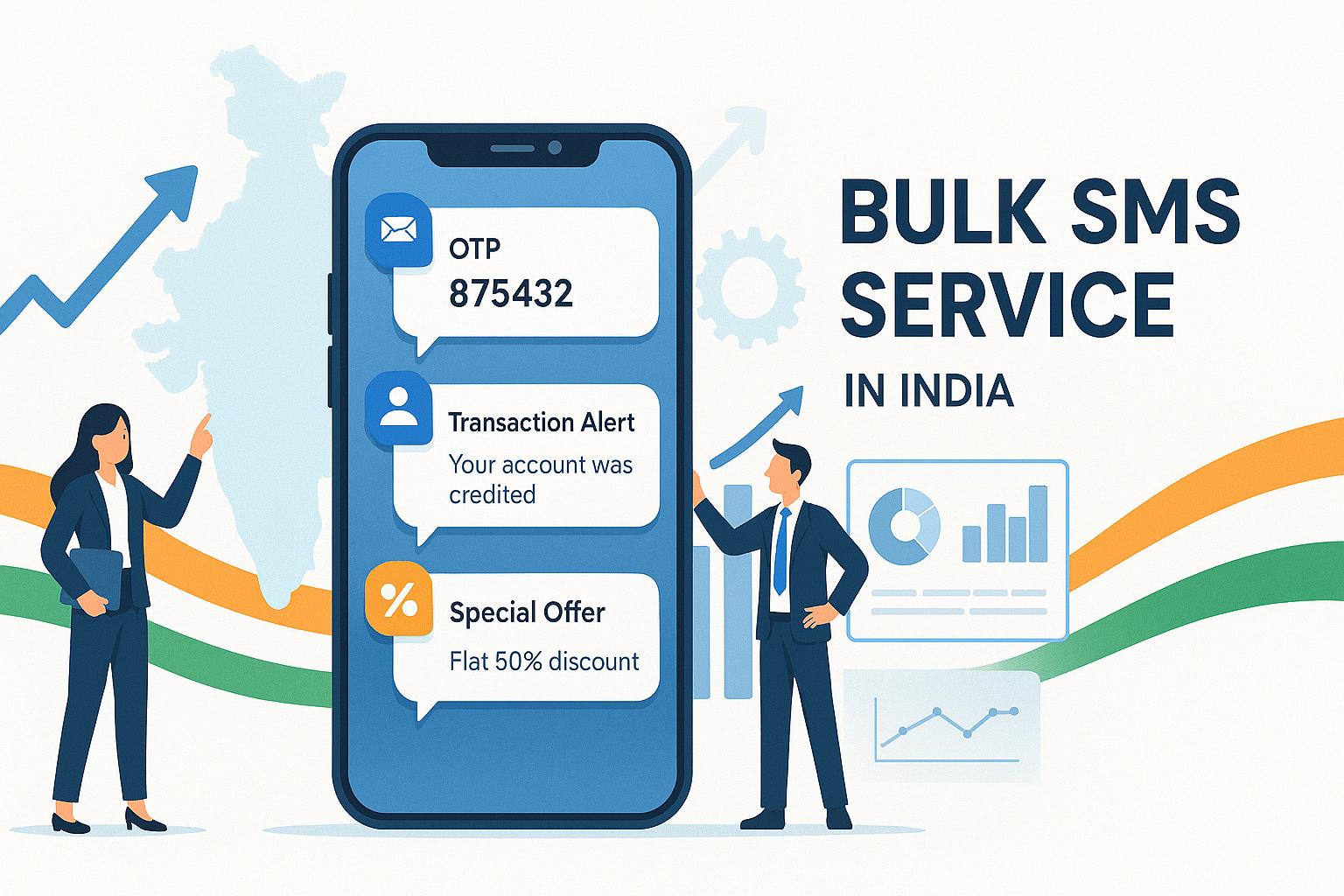
Bulk messaging is one of the most effective channels available to Indian businesses, and one of the easiest to get wrong. Businesses lose SMS delivery, get WhatsApp numbers restricted, or discover their campaigns simply aren't arriving — usually because of rules they didn't know applied.
This is a practical guide to sending marketing messages in India properly. Regulations change and specifics vary by provider, so treat this as orientation and confirm current requirements with your provider before launching campaigns.
SMS: The DLT Framework
Commercial SMS in India runs through the TRAI-mandated Distributed Ledger Technology system. If you're sending business SMS, you're inside this framework, and messages that don't comply simply don't get delivered.
What registration involves, broadly:
Entity registration. Your business registers on a DLT platform, with business documents verified.
Sender ID (header). The short alphabetic code recipients see instead of a number. This gets registered and approved.
Template registration. This is the part businesses find restrictive: your message formats must be pre-registered and approved. Variable parts (name, amount, order number) are allowed within a fixed structure. You cannot simply write a new message and send it — it must match an approved template.
Consent records. The framework distinguishes between promotional and transactional or service messages, with different rules and delivery windows applying.
The practical implication: plan your message templates in advance and register variants you'll need. Businesses that register one template then want to run a different campaign next week discover that approval takes time.
WhatsApp: Different Rules, Different Risks
WhatsApp is not governed by DLT — it operates under Meta's own Business and Commerce policies, and the enforcement mechanism is different. Rather than non-delivery, the consequence is quality ratings dropping, messaging limits being reduced, or the number being restricted entirely.
Two paths exist, and the distinction matters:
WhatsApp Business App (free). Broadcast to a limited number of contacts who have saved your number. Fine for very small operations, not built for scale.
WhatsApp Business API (official). For genuine business messaging at volume — template-based messages, automation, multiple team members on one number, and CRM integration. Meta prices this per conversation, with different rates by conversation category.
A warning worth stating plainly: unofficial "bulk WhatsApp sender" tools that operate outside the official API violate WhatsApp's terms. They may work for a while. When enforcement catches up, businesses lose their number — and with it, years of customer conversations that were never backed up anywhere. We consistently advise against this route regardless of what a tool promises, because the downside is permanent and the number is often more valuable than the campaign.
The Rule That Prevents Most Problems
Only message people who agreed to hear from you.
This isn't only politeness — it's what protects your delivery rates, your sender reputation, and your number. Recipients marking messages as spam is the signal that triggers restrictions on every platform.
Collect opt-ins honestly: ask at billing time, include a checkbox on website forms, offer a genuine reason to subscribe. Record when and how consent was given.
Never use purchased lists. They produce spam complaints immediately, and the cost is your channel rather than the list seller's.
Honour opt-outs promptly. Someone who wants out and keeps receiving messages will report you.
What to Send, and How Often
The businesses that succeed with messaging follow a simple discipline:
Service and transactional messages — order confirmations, dispatch updates, appointment reminders, payment receipts, fee due notices. These are welcomed, read immediately, and rarely reported. They're also where most of the business value sits.
Promotional messages — genuinely good offers, sparingly. One or two a week at most, during reasonable hours.
Never: daily promotions, messages at odd hours, forwarded marketing images with no context, or anything to someone who never opted in.
The pattern that damages businesses isn't one bad campaign — it's frequency. Customers tolerate a useful message; they report a weekly nuisance.
Email: The Rules Are Quieter but Real
Email has no DLT equivalent, but deliverability is governed by the receiving providers. Practically: authenticate your sending domain properly (your provider will guide you through SPF, DKIM and DMARC), include a working unsubscribe link, avoid buying lists, and warm up new sending domains gradually rather than blasting thousands on day one.
Poor practice here doesn't get you fined — it gets you filtered into spam, which is worse, because you'll keep paying to send messages nobody sees.
What Good Setup Looks Like
Before any campaign: opt-in records maintained and dated. Templates registered for SMS. Official API for WhatsApp at scale. Sending domain authenticated for email. Unsubscribe or opt-out honoured across every channel. And messages routed through one system so that consent, history, and preferences live with the customer record rather than in someone's phone.
That last point matters more than businesses expect. When marketing runs from a personal device or a standalone tool, you have no record of who consented to what — which is exactly the record you need when something goes wrong.
How We Handle This
DataBridgeCRM's WhatsApp, SMS, and email marketing tools are built inside the same platform that holds your customer records — so opt-in status, communication history, and campaign results stay attached to the customer rather than scattered across tools.
Our guidance to every client is the same: build a permission-based list, lead with useful service messages rather than promotions, and use official channels. It's slower than blasting a purchased list, and it's the only version that still works in year three.
Want to set up compliant messaging for your business? Explore our WhatsApp marketing tools, see our SMS marketing solutions, or book a free demo.

