
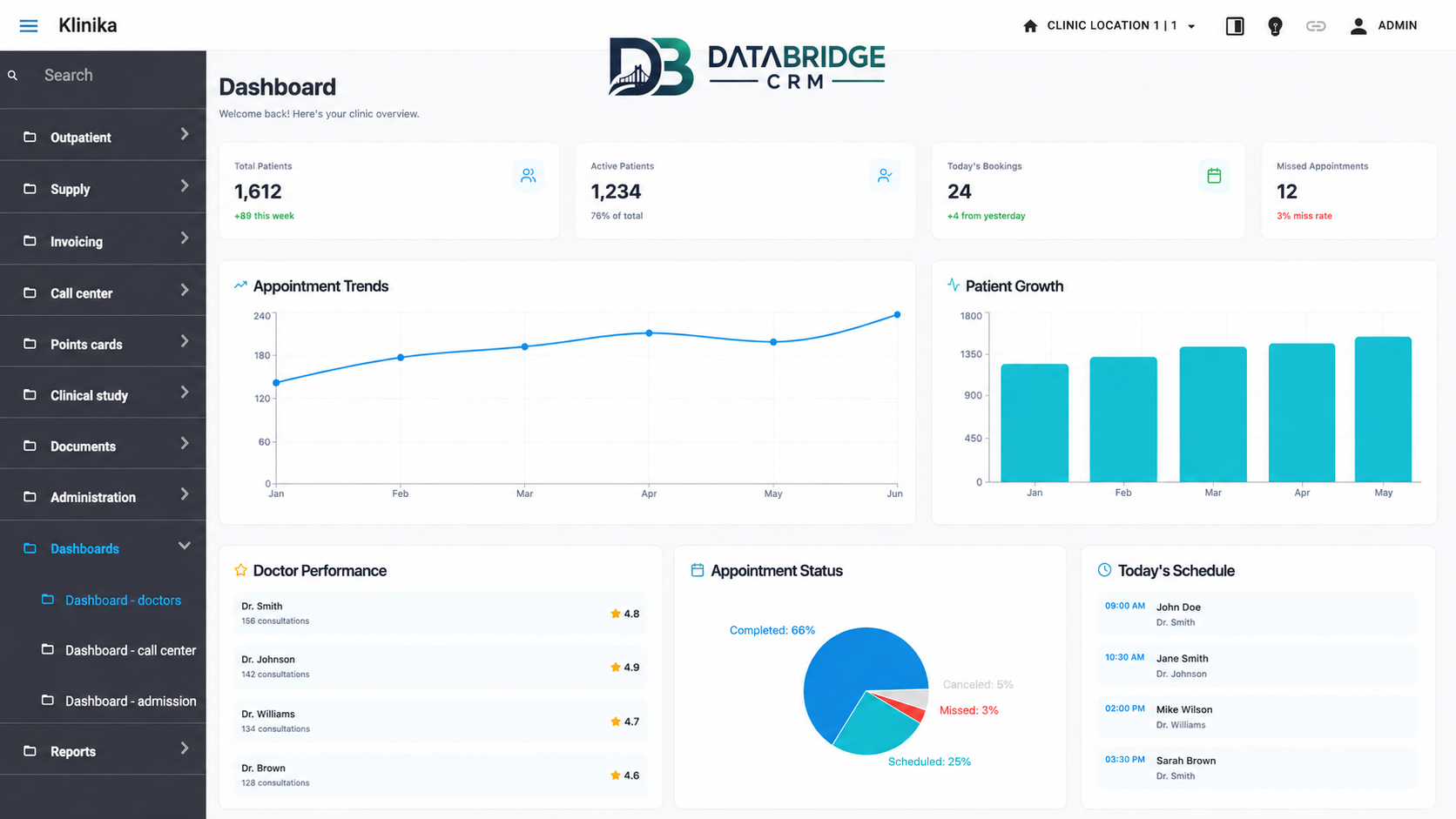
Hospital and clinic software carries a requirement most business software doesn't: when it fails or slows down, a patient is waiting. That changes what matters in choosing it.
This guide covers what hospital management software should handle, what to test before buying, and the requirements specific to Indian healthcare that generic systems miss.
The Test That Matters Most
How long does it take to pull up a returning patient's history during a consultation?
A doctor with a patient in front of them cannot wait thirty seconds for records to load, and won't use a system that makes them. If retrieving previous visits, prescriptions, and test results takes more than a few seconds, doctors will keep their own notes and the system becomes a billing tool rather than a clinical one.
Test this yourself in the demo, with a patient record that has several past visits.
What Hospital Software Actually Needs to Handle
Registration and patient identity
Fast registration for new patients, and reliable identification of returning ones. The common failure: the same patient existing three times because their name was spelled differently. Phone-number-based lookup handles this better than name search in Indian conditions.
Appointments and queue management
Consultation lengths vary by doctor and case. Walk-ins arrive alongside appointments. Doctors run late. A system that assumes fixed slots and perfect scheduling doesn't survive a real OPD.
What genuinely helps: visible queue status, automated appointment reminders (which measurably reduce no-shows), and the ability to reorder without disrupting everything.
Clinical records
Consultation notes, diagnoses, prescriptions, and test results — accessible quickly, and organised so a doctor can see the history at a glance rather than scrolling through entries.
Billing across payment types
Cash patients, insurance and TPA cases, corporate tie-ups, and government scheme patients each bill differently. Indian hospitals handle far more billing variation than most systems anticipate, and forcing all cases through one flow creates workarounds.
GST treatment for healthcare services has specific rules — confirm the system handles your situation correctly rather than assuming.
Pharmacy and inventory
Where hospitals with in-house pharmacies find real money. Stock linked to dispensing, expiry tracking (genuinely critical for medicines), batch management, and reorder alerts.
Lab and diagnostics
Test orders flowing from consultation to lab, results returning to the patient record, and reports available to the patient without a phone call.
The Requirements Generic Systems Miss
Patient data confidentiality is not optional. Access control so staff see only what their role requires, and audit trails showing who accessed which record. This matters legally under India's data protection framework and ethically regardless.
It must work when the internet drops. Registration and billing cannot stop. Ask to see offline operation demonstrated.
Staff comfort varies enormously. Reception staff, nurses, doctors, and pharmacy staff have very different technology comfort levels. A system usable by only the confident ones will be bypassed by the rest.
WhatsApp for patient communication. Appointment reminders, report availability notifications, and follow-up reminders reach Indian patients on WhatsApp far more reliably than email or SMS.
Where Clinics and Hospitals Lose Money Invisibly
No-shows. Empty consultation slots are unrecoverable revenue. Automated reminders are among the highest-return features available, and many clinics still call manually or not at all.
Pharmacy leakage and expiry. Without stock linked to dispensing, the gap between what should have been issued and what actually was is invisible. Expired stock is a direct write-off that better tracking prevents.
Insurance and TPA claims delayed or rejected. Documentation gaps discovered weeks later. Systems that capture required information at the point of service reduce rejections substantially.
Patients who don't return for follow-up. Clinically important and commercially significant. A system that flags due follow-ups and reminds patients recovers both.
Unbilled services. Procedures performed, consumables used, and services provided that never reached the bill because someone forgot to record them.
What to Test in the Demo
Do these yourself:
Register a new patient and then find them again by phone number. Pull up a returning patient's full history. Add a consultation note and prescription. Bill a case with partial insurance coverage. Dispense a medicine and watch stock reduce. Check what a receptionist can see versus what a doctor can see. Disconnect the internet mid-registration. And produce yesterday's collection report.
Cost Questions Worth Asking
Is pricing per user, per doctor, or per facility? What is the total first-year cost including setup, data migration from existing records, and training? Are pharmacy and lab modules included or separate? Who migrates our existing patient records, and is that included? And what is the support response time during OPD hours?
Start Narrower Than You Think
The most common implementation failure in healthcare is rolling out everything simultaneously — registration, billing, clinical records, pharmacy, lab, insurance — during a busy period. Staff get overwhelmed, workarounds appear, and within weeks the registers are back alongside the software.
Start with registration, appointments, and billing. Get those genuinely working for a month. Add clinical records next, then pharmacy and lab. Each stage should be routine before the next begins.
Our Approach
DataBridgeCRM's Hospital CRM is built around these realities — fast patient lookup, appointment and queue management with WhatsApp reminders, billing across cash, insurance and corporate cases, pharmacy stock linked to dispensing, and role-based access to patient information.
It connects to our wider platform, so patient records, billing, inventory, and communication work as one system rather than several that need reconciling.
Running a hospital or clinic and evaluating systems? Book a free demo — bring your own patient scenarios, including the complicated billing cases. Those reveal more than any feature list.

