
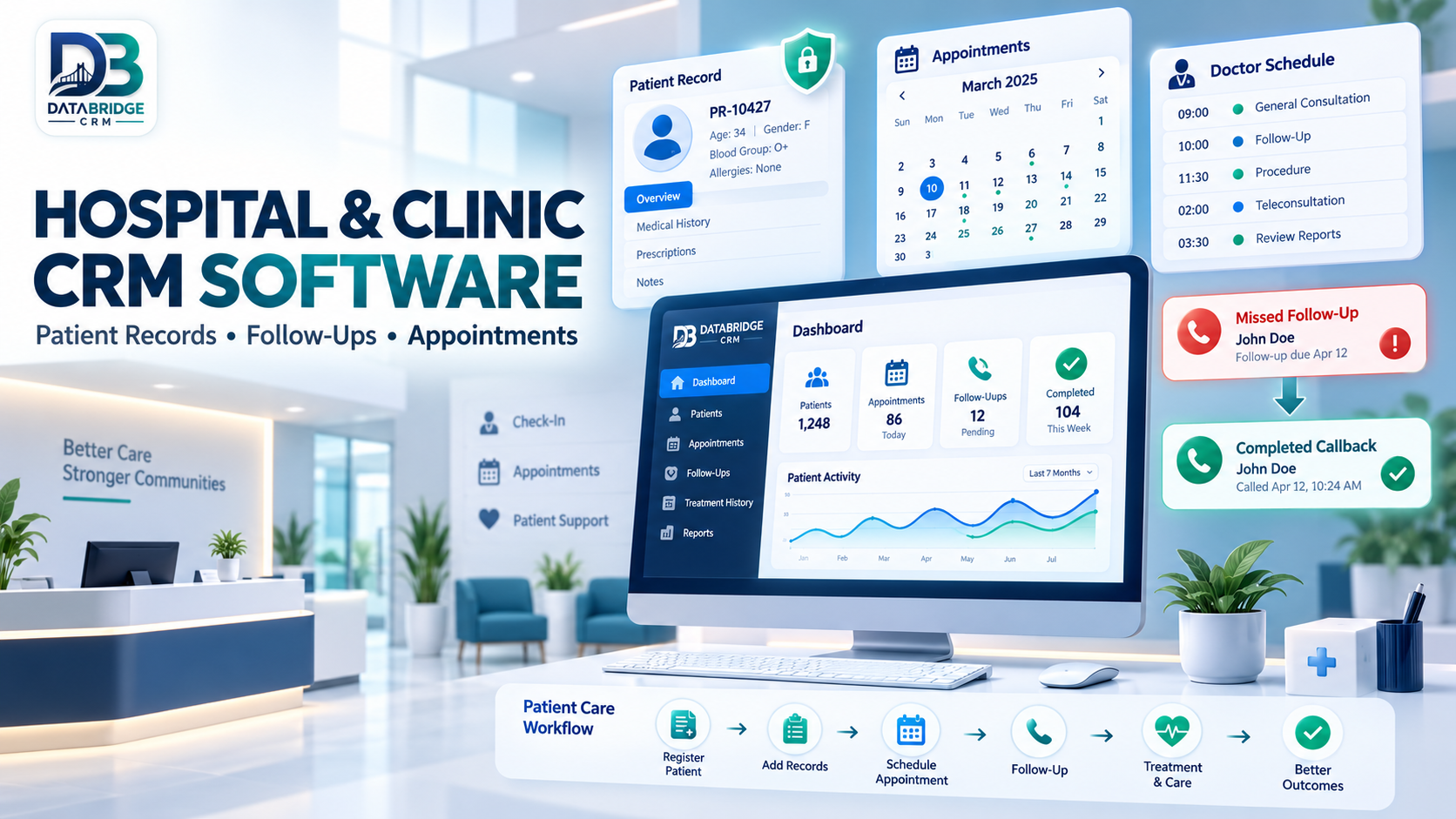
Clinics and small hospitals lose more revenue and patient trust to disorganization than most realize — a missed follow-up reminder, a patient record that takes ten minutes to locate, a billing error caught only after the patient has already left. Hospital and clinic CRM software exists specifically to eliminate this kind of friction from daily operations.
What Clinics Need to Handle Every Day
Appointment Scheduling
Booking, rescheduling, and managing patient appointments without double-booking doctors or losing track of walk-ins during a busy day.
Patient Records
Quick, secure access to a patient's history, prescriptions, and past visits — critical both for care quality and for avoiding repeated, unnecessary questions that frustrate returning patients.
Billing and Insurance Processing
Accurate billing tied directly to services rendered, with support for insurance claims where relevant, reduces both patient confusion and administrative rework.
The Follow-Up Problem Most Clinics Don't Solve
A significant share of patients who need a follow-up visit, a routine check-up, or a repeat prescription simply don't come back — not because they don't need care, but because no one reminded them. Without a systematic follow-up process, this represents both a real health gap for patients and lost revenue for the clinic.
What CRM Adds Specifically for Healthcare
Automated Appointment Reminders
SMS or WhatsApp reminders sent automatically before an appointment reduce no-shows significantly, without requiring staff to manually call every patient.
Follow-Up and Recall Campaigns
Automatically flagging patients due for a follow-up, annual check-up, or recurring treatment, and reaching out proactively rather than relying on the patient to remember on their own.
Multi-Doctor and Department Coordination
For clinics or small hospitals with multiple doctors or departments, a shared system means any staff member can access accurate scheduling and patient information, rather than each doctor's schedule living in a separate notebook.
Patient Communication History
Keeping a record of all communication — appointment confirmations, reminders, billing notices — tied to each patient profile gives staff full context without digging through separate systems.
Why Data Security Matters More Here Than Almost Anywhere Else
Patient data is uniquely sensitive, and clinics need software that takes data security seriously — proper access controls, encrypted storage, and reliable backups aren't optional extras for healthcare data; they're a baseline requirement that protects both patients and the clinic's reputation.
What to Look for in Clinic Management Software
- Does it reduce no-shows through automated reminders, not just track appointments passively?
- Can multiple staff or doctors access accurate, shared scheduling and patient data?
- Is patient data properly secured, with real access controls?
- Does billing connect directly to services provided, reducing manual reconciliation?
DataBridgeCRM's Healthcare CRM Solution
DataBridgeCRM includes appointment scheduling, patient record management, automated reminders, and billing built specifically for clinics and small hospitals, backed by enterprise-grade security and 99.9% uptime — part of the platform's broader all-in-one system starting at ₹50/day.
Reduce No-Shows and Keep Patient Records Organized
If missed follow-ups or scattered patient records are costing your clinic revenue and patient trust, book a free demo of DataBridgeCRM's clinic management software and see a connected system in action.

