
Most small businesses manage social media the same way: someone posts when they remember, replies to messages when they notice them, and nobody has any idea whether it's producing customers.
That approach works at very small scale and breaks the moment there's more than one person involved or more than one platform.
The Problem That Actually Costs You
It isn't inconsistent posting. It's unanswered messages.
Enquiries arrive across Instagram direct messages, Facebook messages, WhatsApp, and post comments. They land on whichever phone happens to be logged in. Some get answered immediately, some hours later, and some never — because nobody knew they existed.
Every unanswered enquiry is a customer who contacted you and got nothing. This is invisible loss: nobody complains, they just go elsewhere.
The test: send an enquiry to your own business through Instagram right now and time how long it takes anyone to respond. Most businesses are uncomfortable with the answer.
What Managing Social Media Properly Means
Not posting more. Four things:
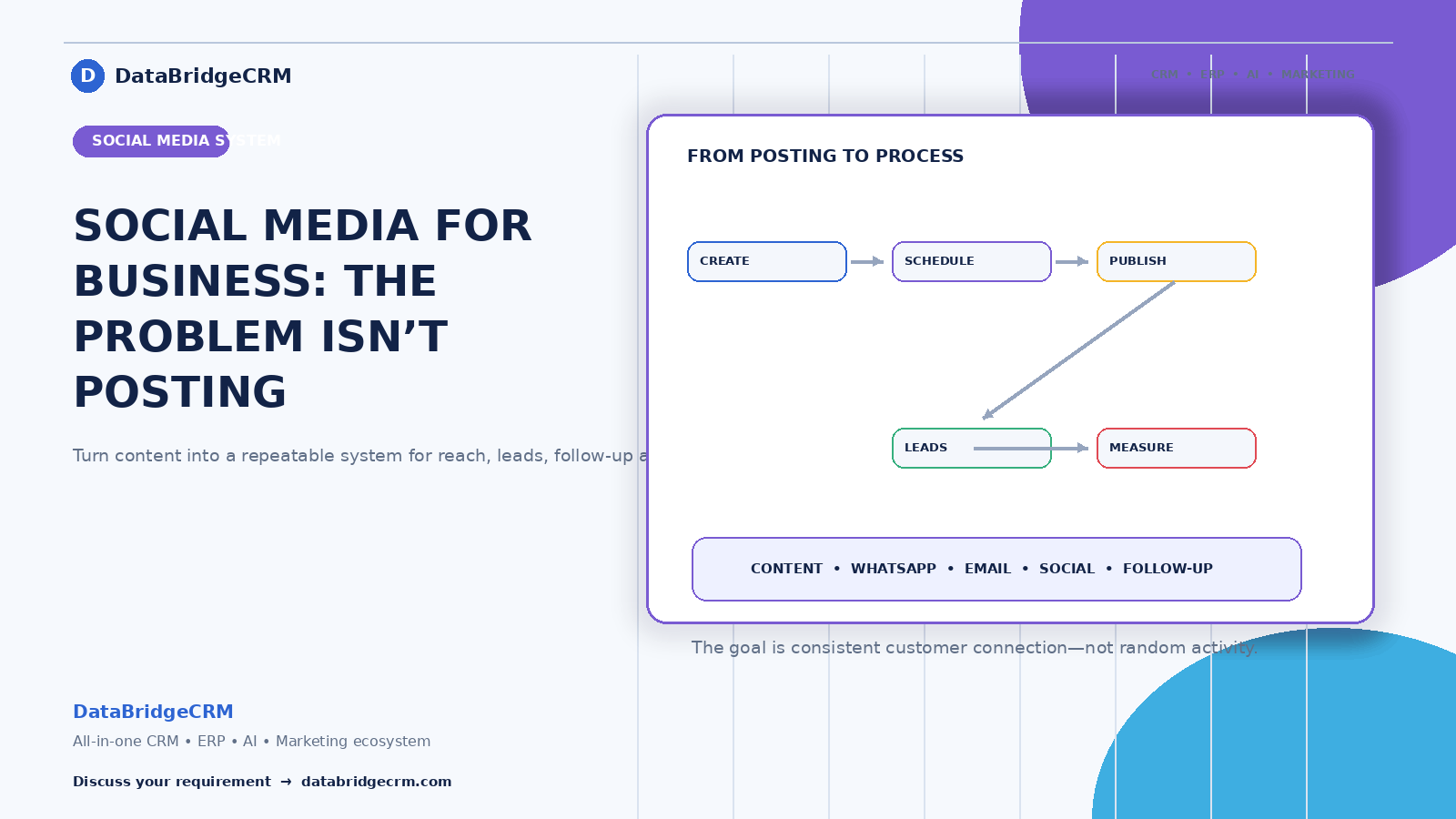
Everything in one place. Messages and comments from every platform visible together, so nothing depends on someone opening the right app.
Scheduled posting. Content planned and queued rather than remembered. This is what makes consistency survive a busy week.
Enquiries becoming records. A message from a potential customer should become a lead with a follow-up date, not stay buried in a chat thread.
Measurement that means something. How many enquiries, from which platform, and how many became customers.
The Handover Problem
When social media runs from personal accounts on personal phones, three things happen eventually:
The person leaves and takes access with them. Businesses lose entire accounts this way — years of content and followers, gone because the account was created with a personal email.
Nobody can cover. One person unavailable means messages go unanswered until they're back.
Customer conversations disappear. The context of what was discussed lives in one person's chat history.
The fix is basic and rarely done: business accounts created with business email, access managed through proper business tools, and enquiries recorded in a system rather than a phone.
Choosing Platforms Honestly
Being everywhere with a small team means being weak everywhere.
Instagram for visual businesses — food, fashion, interiors, salons, events, anything where the result can be shown.
Facebook for broad and often older audiences, and still strong for local businesses in India.
WhatsApp is where Indian customers actually communicate. Status updates and broadcasts to people who opted in reach more of your existing customers than any feed post.
LinkedIn only if you sell to businesses.
Pick two. Do those properly. Add more only when you have capacity, not ambition.
What to Post (The Short Version)
Businesses default to posting about themselves — offers, announcements, festival greetings. It produces nothing because it gives the viewer no reason to care.
What performs: showing the work (before and after, the process, completed jobs), answering the questions you're always asked, customers in their own words, and the people behind the business.
Consistency matters more than frequency. Three posts a week sustained for a year beats daily posting for six weeks followed by silence.
What to Actually Measure
Ignore followers and reach as success measures. A page with 50,000 followers and no enquiries is worth less than one with 2,000 who buy.
Track instead: enquiries from social (messages, comments asking about price, customers who mention seeing you online), response time to those enquiries, saves and shares as genuine value signals, and how many enquiries became customers.
The simplest tracking available: ask every new customer how they found you. It costs nothing and it's more reliable than most analytics.
Where Social Media Budgets Get Wasted
Boosting everything. Watch which posts get engagement without paying, then promote those.
Broad targeting. Reaching everyone in India when you serve one city.
Buying followers. They don't buy anything, they damage your engagement rate, and anyone checking can tell.
Posting without responding. The most expensive one. Generating interest you don't act on is paying to disappoint people.
The Realistic Setup for a Small Business
Business accounts created with business email, not personal. Two platforms, chosen because your customers are there. Content planned monthly and scheduled rather than remembered. Messages and comments checked at defined times daily by a named person. Enquiries recorded as leads with follow-up dates. And one number reviewed monthly: enquiries produced, and what they cost.
That's the whole system. It's less than most businesses attempt and considerably more than most achieve.
How We Approach It
DataBridgeCRM includes social media management alongside WhatsApp, SMS, and email tools — with enquiries flowing into the same customer records as everything else.
That connection is the practical point. A message on Instagram becomes a lead with a follow-up date rather than a notification someone might act on. And when the person handling social media is unavailable — or leaves — the enquiries and their history stay with the business.
Losing enquiries in social media inboxes? Book a free demo — and before that, send your own business an enquiry and time the response. That number is usually the whole argument.

