
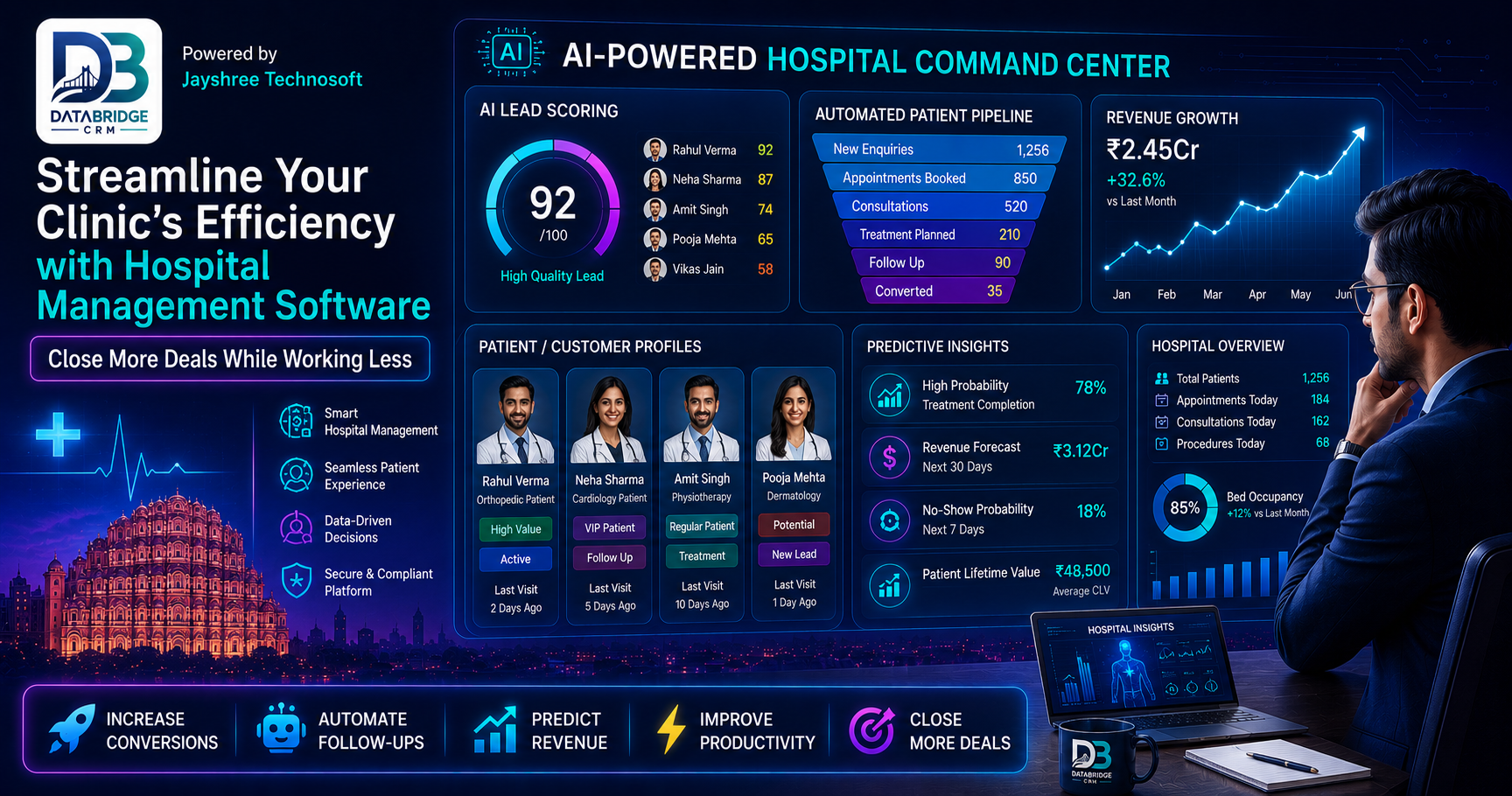
In today's fast-paced healthcare environment, efficiency is paramount. Clinics face mounting pressures to deliver quality patient care while managing operational challenges effectively. Enter hospital management software-a transformative solution that promises to streamline clinics’ efficiency. By leveraging advanced technology, clinics can improve administrative workflows, enhance patient management, and ultimately provide better care. This article discusses how streamlining clinics with hospital management software can lead to significant efficiency gains, and highlights DataBridge CRM as a top-tier solution in this landscape.
The Imperatives of Efficiency in Healthcare
Efficiency in a clinical setting is not merely a goal; it’s a necessity. Healthcare professionals often juggle multiple tasks, from scheduling appointments to handling patient records. Studies show that inefficient workflows can lead to 40% wasted time in healthcare settings (source: Harvard Business Review). Such inefficiencies not only hinder productivity but can also negatively impact patient satisfaction and clinical outcomes.
The shift toward automated solutions, like hospital management software, is increasingly seen as an answer to these pressing challenges. By optimizing operations, clinics can dedicate more time to patient care rather than administrative burdens.
Core Features of Hospital Management Software
Hospital management software offers a variety of features that help clinics streamline operations. Here are a few essential functionalities:
- •- Appointment Scheduling: Provides an intuitive interface for scheduling and managing patient appointments.
- •- Patient Management: Streamlines the documentation of patient information, medical history, and treatment plans.
- •- Billing and Invoicing: Automates the billing process, reducing errors and expediting payment collection.
- •- Inventory Management: Monitors medical supplies and medications, ensuring adequate stock levels.
- •- Reporting and Analytics: Generates reports on key performance indicators, helping clinics make data-informed decisions.
Implementing such features can empower clinics to reduce manual errors, enhance communication, and ensure compliance with regulatory requirements.
Benefits of Streamlining Clinics with Hospital Management Software
Integrating hospital management software into clinic operations can yield numerous benefits:
Improved Patient Care
A well-implemented management system ensures that healthcare professionals have easy access to critical patient information. Faster retrieval times mean that medical staff can make informed decisions quickly, leading to enhanced patient care and satisfaction rates. For instance, clinics using electronic health records (EHRs) saw a reported 30% increase in patient satisfaction (source: American Medical Association).
Reduced Administrative Burden
By automating routine tasks, clinic administrators can focus on strategic initiatives that drive growth. Hospital management software reduces the time spent on paperwork and scheduling, allowing more staff to engage in direct patient care. This shift ultimately fosters a more efficient workflow that benefits employees and patients alike.
Financial Efficiency
Cost management is a vital aspect of clinic operations. Hospital management software simplifies billing, decreasing the chances of errors that could lead to financial losses. Efficient billing also improves cash flow, which is essential for maintaining the clinic's financial health. Features that allow for advance payment notifications and reminders can further streamline collections.
Implementing Hospital Management Software: Best Practices
Adopting new technology can be daunting, but successful implementation of hospital management software can be achieved by following these best practices:
- •- Conduct a Needs Assessment: Understand your clinic’s specific requirements to choose the most suitable software.
- •- Involve Staff in the Decision-Making Process: Engage healthcare professionals in the selection process to ensure buy-in and address their concerns.
- •- Prioritize Training: Invest in comprehensive training programs for staff. Proper training minimizes resistance and maximizes utilization.
- •- Monitor Performance: Regularly assess how well the software meets your clinic’s needs and make adjustments as necessary.
By integrating these best practices, clinics can maximize the value derived from their hospital management software investment.
Future Trends in Hospital Management Software
As technology continues to evolve, so too does the landscape of hospital management software. Here are some emerging trends worth noting:
- •- Telemedicine Integration: With the rise of telehealth, software solutions are evolving to incorporate virtual treatment options seamlessly.
- •- AI and Machine Learning: Algorithms will help predict patient outcomes and assist in clinical decision-making, improving care quality.
- •- Data Security Enhancements: As data breaches become more common, enhanced security measures will be critical for protecting sensitive patient information.
By staying ahead of these trends, clinics can ensure that their software investments remain future-proof.
Frequently Asked Questions
Conclusion
Implementing hospital management software is a game-changer for clinics aiming to improve both operational efficiency and patient care quality. By streamlining workflows and automating daily tasks, clinics can focus on what truly matters-delivering exceptional healthcare services. As you consider advancements in your clinic, exploring a solution like DataBridge CRM can pave the way for a more efficient and patient-centered organization. The future is bright for clinics willing to embrace technology aimed at streamlining operations.

