
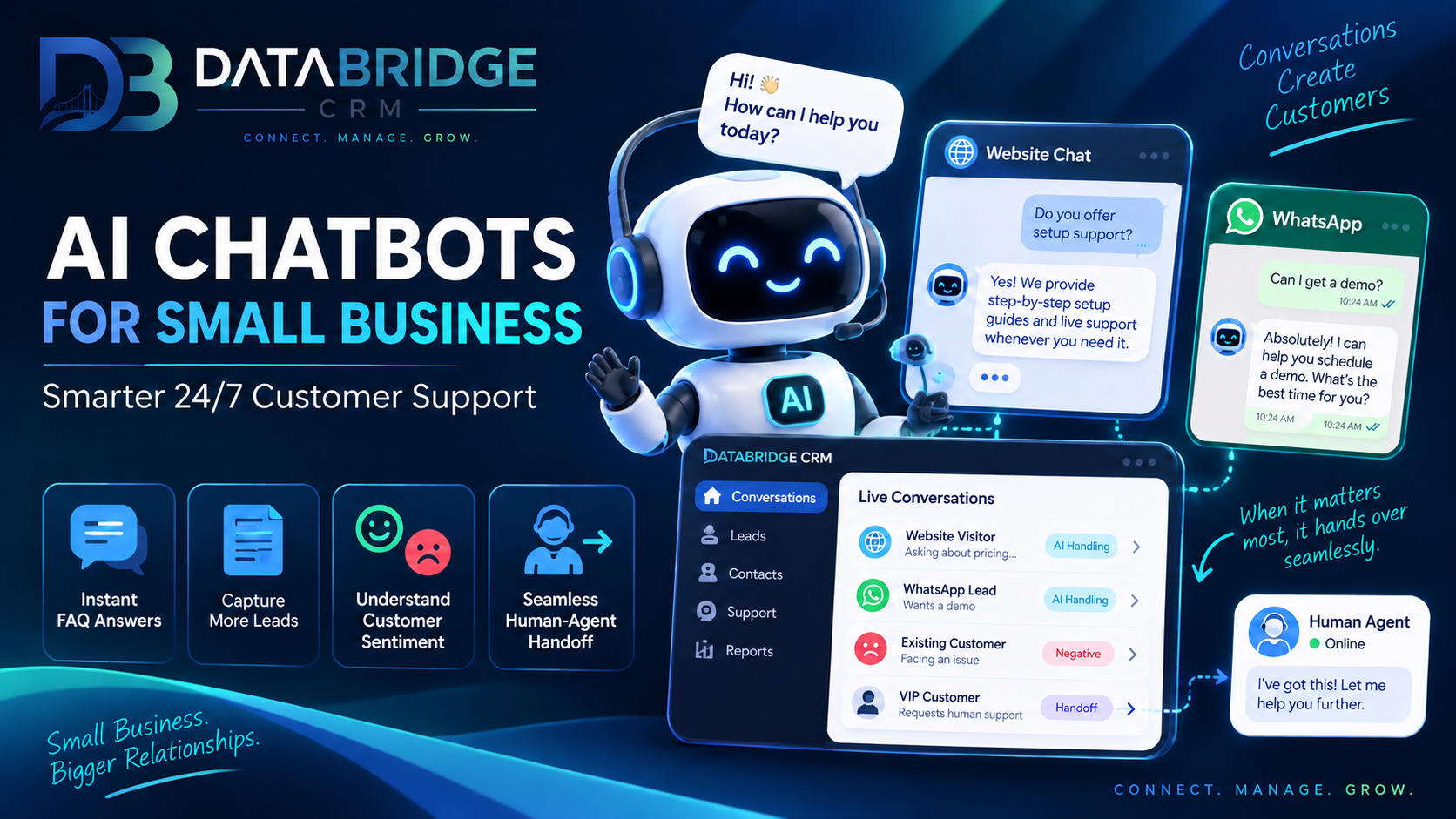
Customers today expect an answer within minutes, not hours — regardless of whether they're messaging a large enterprise or a small local business. For businesses without a large support team, meeting that expectation manually is nearly impossible. This is exactly the gap AI chatbots are stepping in to close, and their adoption among small and mid-size businesses has accelerated sharply as the technology has matured.
Why Customer Expectations Have Changed
The rise of instant messaging and on-demand services has trained customers to expect quick responses everywhere — including from a local business's website or WhatsApp number. A delayed reply, even by a few hours, often means a lost lead who has already moved on to a competitor who answered faster.
What AI Chatbots Can Actually Do
Modern AI chatbots go well beyond the scripted "press 1 for sales" bots of the past. They can:
- Answer FAQs instantly — pricing, business hours, service details — without human involvement
- Qualify leads — asking the right follow-up questions to understand what a visitor needs before handing them to a sales rep
- Capture contact details — turning anonymous website visitors into leads even outside business hours
- Provide order/service status updates — reducing repetitive "where is my order" queries
- Escalate complex queries to a human — recognizing when a conversation needs a real person and routing it accordingly
Real Use Cases Across Industries
- E-commerce: answering product questions and order status instantly, day or night
- Clinics/hospitals: handling appointment booking queries and basic FAQs before a receptionist needs to step in
- Hotels: answering booking and availability questions for guests browsing outside office hours
- Service businesses: capturing lead details from website visitors who would otherwise leave without contacting anyone
The Business Case: Why This Matters Beyond Convenience
The real value isn't just "looking modern" — it's measurable. Faster response times directly improve conversion rates, since a large share of leads go with whichever business responds first. A chatbot that works 24/7 also means a business doesn't lose leads that come in outside working hours, which is often when people browse and compare options most.
Where AI Chatbots Fit Into a Broader Strategy
Chatbots work best when they're connected to the rest of a business's customer data — not as a standalone widget. When a chatbot conversation feeds directly into a CRM, a captured lead doesn't just sit in a chat log; it becomes a tracked contact that a sales team can follow up on, with the full conversation history attached.
Getting Started with AI Chatbots
DataBridgeCRM's AI Agents include chatbot capability built directly into the same platform as the CRM, so every chatbot conversation and captured lead automatically flows into your customer database — no manual copying, no disconnected tools.
Curious how an AI chatbot could work for your business? Explore AI Solutions or book a free demo.

