
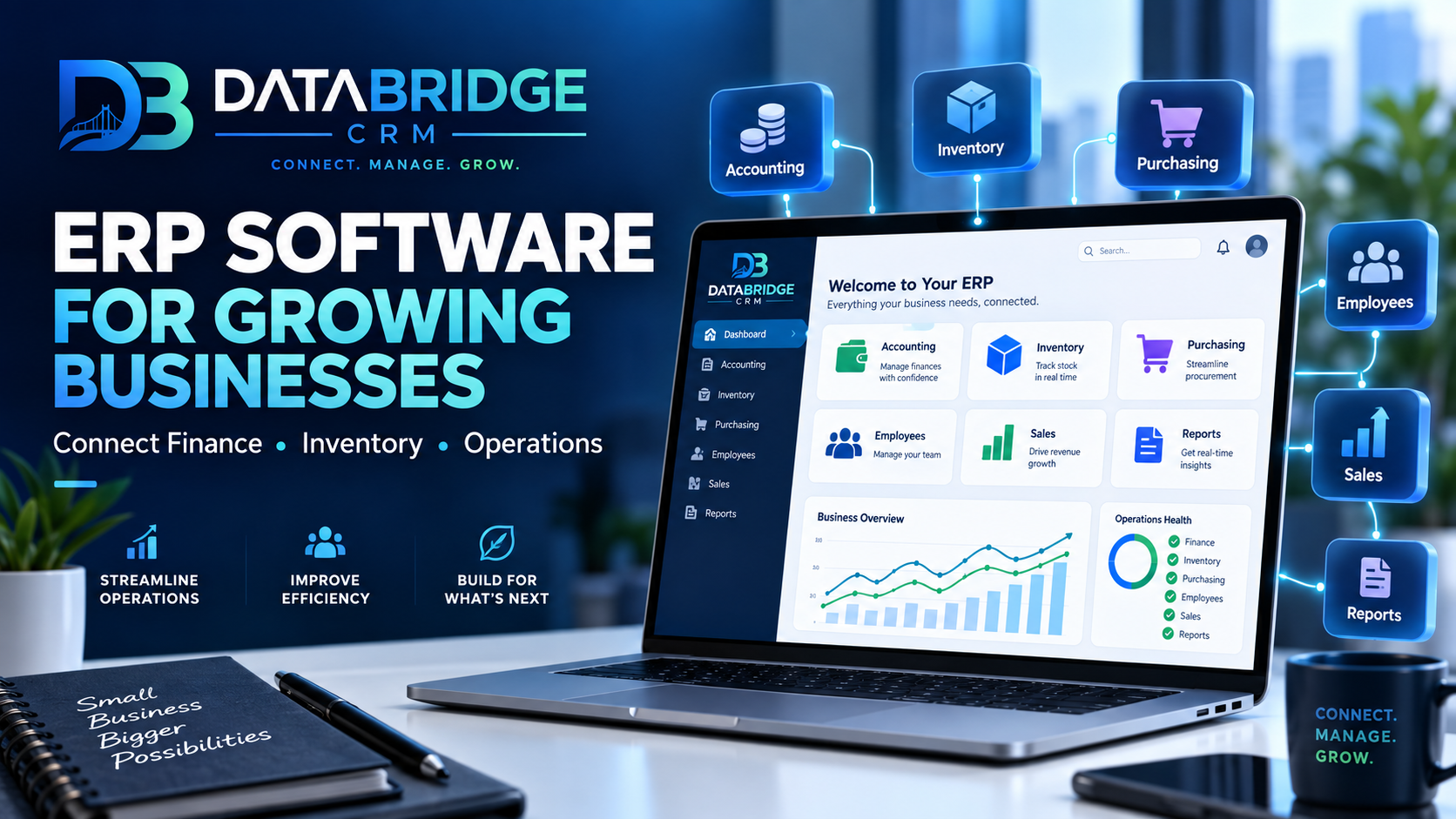
ERP software has traditionally been associated with large enterprises, but the same operational problems it solves — scattered data, manual errors, and poor visibility into the business — hit small and growing businesses just as hard, often earlier than owners expect. Understanding the actual benefits helps clarify when it's time to move beyond spreadsheets.
What Changes When a Business Adopts ERP
Before ERP, most small businesses run on a patchwork of spreadsheets, notebooks, and disconnected apps — one for inventory, another for accounting, a third for staff records. Each works fine in isolation, but none of them talk to each other, which means someone has to manually reconcile data between them, and errors creep in every time that happens.
Key Benefits of ERP Software
1. A Single Source of Truth
Instead of checking three different spreadsheets to answer "how much stock do we have," ERP software gives one accurate, real-time answer — because every department is updating the same system.
2. Fewer Manual Errors
Manual data entry across multiple disconnected tools is where most costly mistakes happen — a sale that doesn't get reflected in inventory, or an invoice that doesn't match what was actually delivered. ERP automatically syncs this data across modules.
3. Better Inventory Management
Real-time stock visibility prevents both overselling (promising stock that isn't there) and overstocking (tying up cash in inventory that isn't moving).
4. Improved Financial Visibility
Instead of waiting until month-end for a clear financial picture, ERP systems provide real-time visibility into revenue, expenses, and outstanding payments — helping owners make faster, better-informed decisions.
5. Time Savings on Repetitive Tasks
Tasks like generating invoices, reconciling stock, or compiling reports that once took hours manually can be automated, freeing staff time for higher-value work.
6. Scalability
A business running on spreadsheets typically hits a wall as it grows — more staff, more locations, more transactions eventually break manual processes entirely. ERP systems are built to scale with the business instead of requiring a system overhaul later.
When Is It Time for a Small Business to Adopt ERP?
The clearest signals are: spending significant time each week reconciling data between different tools, recurring inventory or billing errors, difficulty getting a clear financial picture quickly, or simply outgrowing what a spreadsheet can reasonably handle.
Why Industry-Specific ERP Beats Generic Systems
Generic ERP software often requires expensive customization to fit a specific industry's workflow. DataBridgeCRM offers ERP modules built specifically for verticals like hotels, schools, hospitals, restaurants, and retail — meaning the system fits the business's actual workflow from day one, rather than requiring months of configuration.
See which ERP module fits your business. Explore ERP Solutions or book a free demo.

