
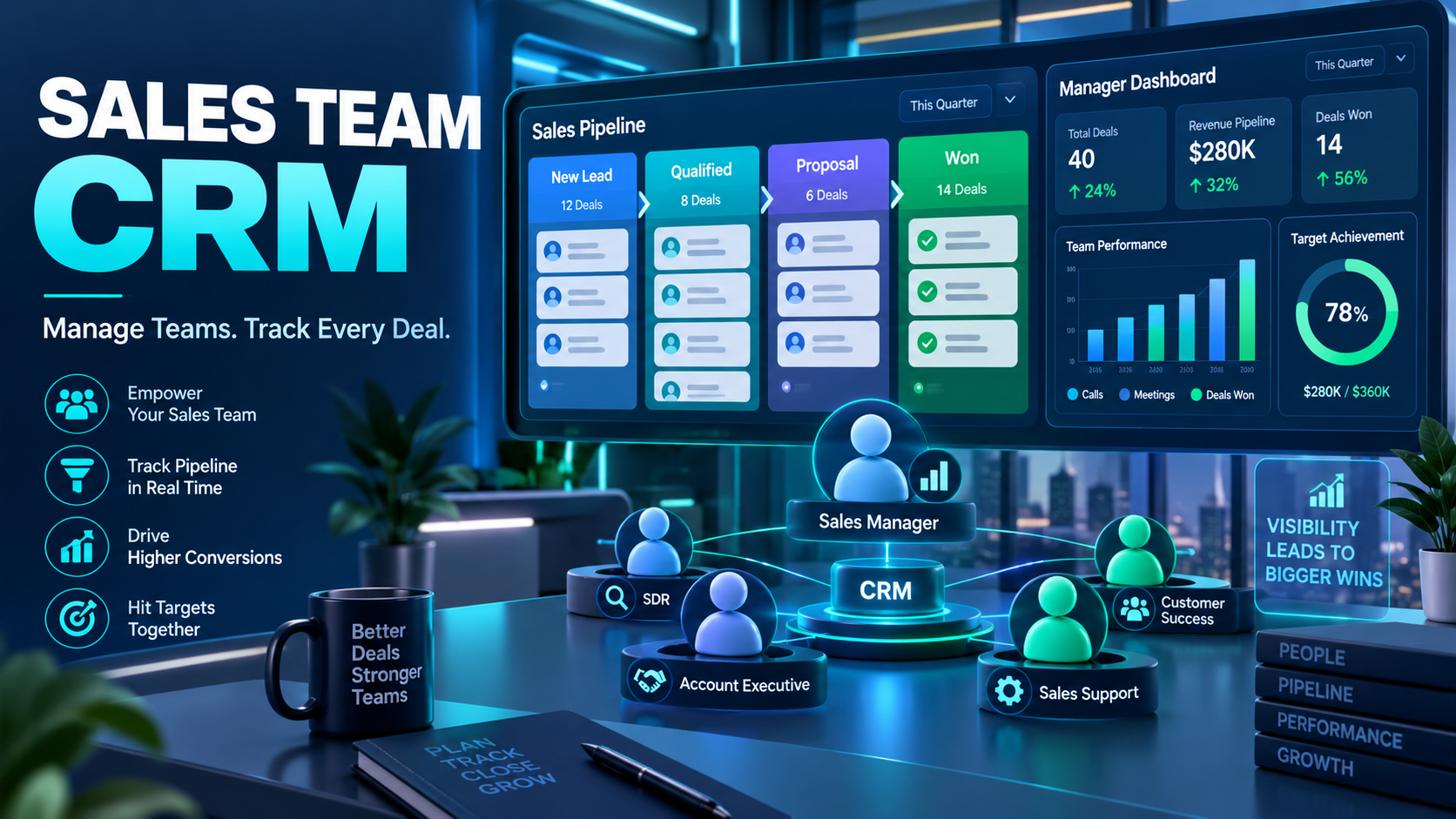
When each sales rep tracks their own leads their own way — one on a notepad, another in a personal spreadsheet, a third mostly from memory — a sales manager loses any real visibility into what's actually happening across the team. CRM for sales team management exists to bring everyone onto one shared, trackable pipeline, so performance and bottlenecks are visible instead of guessed at.
Why Fragmented Lead Tracking Hurts Sales Performance
Without a shared system, leads get inconsistent follow-up depending entirely on individual rep habits, managers can't identify which stage of the pipeline is losing the most deals, and if a rep leaves the company, their leads and relationship context often leave with them — a real, recurring cost most businesses underestimate.
What Sales-Focused CRM Features Should Include
Automatic Lead Assignment
Distributing new leads to the right sales rep based on defined rules — territory, product line, workload — instead of manual assignment that can be inconsistent or slow.
Pipeline Stage Visibility
A clear view of exactly where every deal sits in the sales process — new, contacted, negotiating, closed — giving both reps and managers a shared, accurate picture instead of relying on verbal updates.
Activity and Follow-Up Tracking
Logging calls, emails, and meetings against each lead automatically creates accountability and ensures no lead goes untouched for too long without anyone noticing.
Performance Reporting by Rep and Team
Understanding conversion rates, average deal size, and time-to-close by individual rep and by team reveals coaching opportunities and process bottlenecks that aren't visible without structured data.
Why Managers Need Pipeline Visibility, Not Just Final Numbers
A monthly sales total tells a manager what happened, but not why. Pipeline visibility — how many leads are stuck at which stage, how long deals typically take to close, which reps consistently outperform others — gives managers the information needed to actually coach and improve performance, rather than reacting after the fact to disappointing totals.
Reducing the Risk of Lost Institutional Knowledge
When a sales rep leaves a company, all the relationship context they've built with their leads and customers often leaves with them if it was never systematically recorded. A CRM ensures this history — past conversations, objections raised, specific customer needs — stays with the business, not just in one person's memory.
What to Look for in Sales-Focused CRM Software
- Does it support automatic lead assignment based on your team's actual structure?
- Can managers see pipeline stage visibility in real time, not just periodic reports?
- Is activity logging simple enough that reps will actually use it consistently?
- Does it provide performance reporting broken down by individual and team?
DataBridgeCRM's Sales Team Management Tools
DataBridgeCRM includes lead assignment, pipeline tracking, and activity logging as part of its core CRM functionality, giving sales managers real visibility into team performance without requiring reps to maintain separate personal tracking systems — connected to the same platform used for billing, marketing, and customer communication.
Give Your Sales Team a Shared, Trackable Pipeline
If your sales team is tracking leads inconsistently across personal notes and spreadsheets, book a free demo of DataBridgeCRM's sales management tools and see a connected pipeline in action.

