
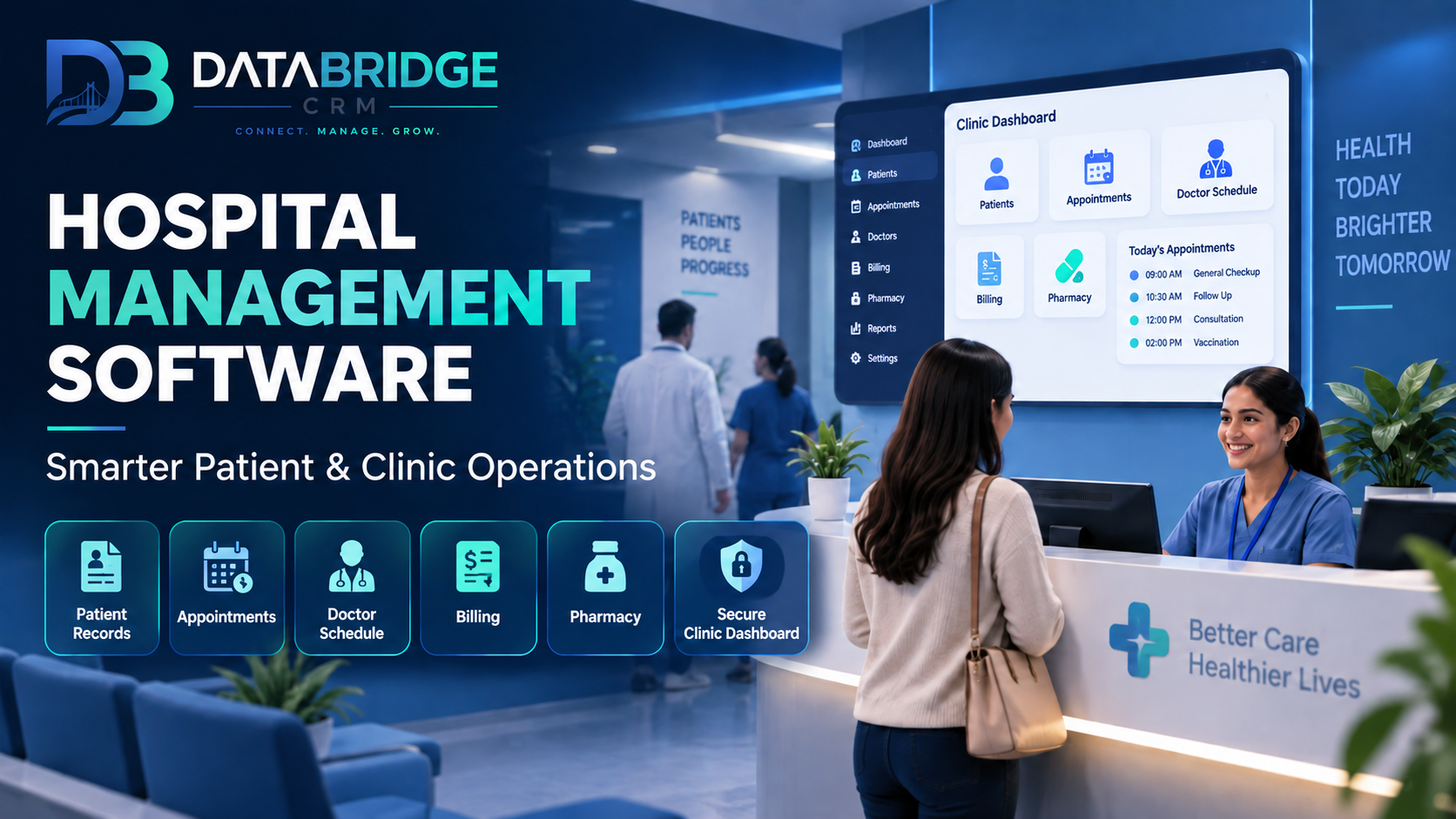
Healthcare providers in India are under constant pressure to see more patients, maintain accurate records, and keep billing error-free — often with lean administrative staff. Hospital management software has become essential infrastructure for clinics and hospitals that want to reduce this operational burden without compromising patient care.
Common Pain Points in Manual Clinic Operations
Clinics and small hospitals that still rely on paper files or disconnected spreadsheets typically struggle with:
- Patient records scattered across physical files, making history lookup slow
- Appointment scheduling conflicts and long waiting times
- Billing errors from manually tallying consultations, tests, and medicines
- No easy way to send appointment reminders, leading to high no-show rates
- Difficulty tracking follow-up care for chronic patients
Core Features That Matter
Electronic Patient Records (EHR)
A centralized digital record for every patient — medical history, prescriptions, test results, and visit notes — accessible instantly instead of pulling a physical file. This is particularly valuable for patients with ongoing or chronic conditions who see the same clinic repeatedly.
Appointment Scheduling
Online and front-desk appointment booking that shows real-time doctor availability, prevents double-booking, and automatically sends confirmation and reminder messages to reduce no-shows.
Billing & Invoicing Automation
Consultation fees, lab tests, and pharmacy charges combined into one accurate bill, removing manual calculation errors and speeding up the checkout process for patients.
Pharmacy & Inventory Management
For clinics with an in-house pharmacy, tracking medicine stock, expiry dates, and reordering thresholds prevents both stockouts and wastage.
Doctor & Staff Scheduling
Managing multiple doctors' shift timings, leave, and department allocation becomes far simpler with a digital roster instead of manual coordination.
Data Security & Compliance
Patient data is sensitive by nature, and any system handling it needs to take security seriously — role-based access (so only authorized staff can view certain records), secure storage, and audit trails. This isn't optional; it's foundational to patient trust and regulatory expectations.
The Patient Experience Impact
From a patient's perspective, the difference is immediately noticeable: shorter wait times, accurate bills, and reminders that make it easier to keep up with follow-up visits. For clinics, this translates into better patient retention — a patient who has a smooth, organized experience is far more likely to return and recommend the clinic to others.
Why Choose an Integrated Hospital CRM
Rather than running separate tools for appointments, billing, and patient records, an integrated Hospital CRM/ERP — like the one available through DataBridgeCRM — connects all of these into a single system. This means a patient's appointment, consultation notes, prescription, and bill are all linked automatically, cutting down on both administrative time and human error.
See it in action for your clinic or hospital. Explore the Hospital CRM module or book a free demo today.

