
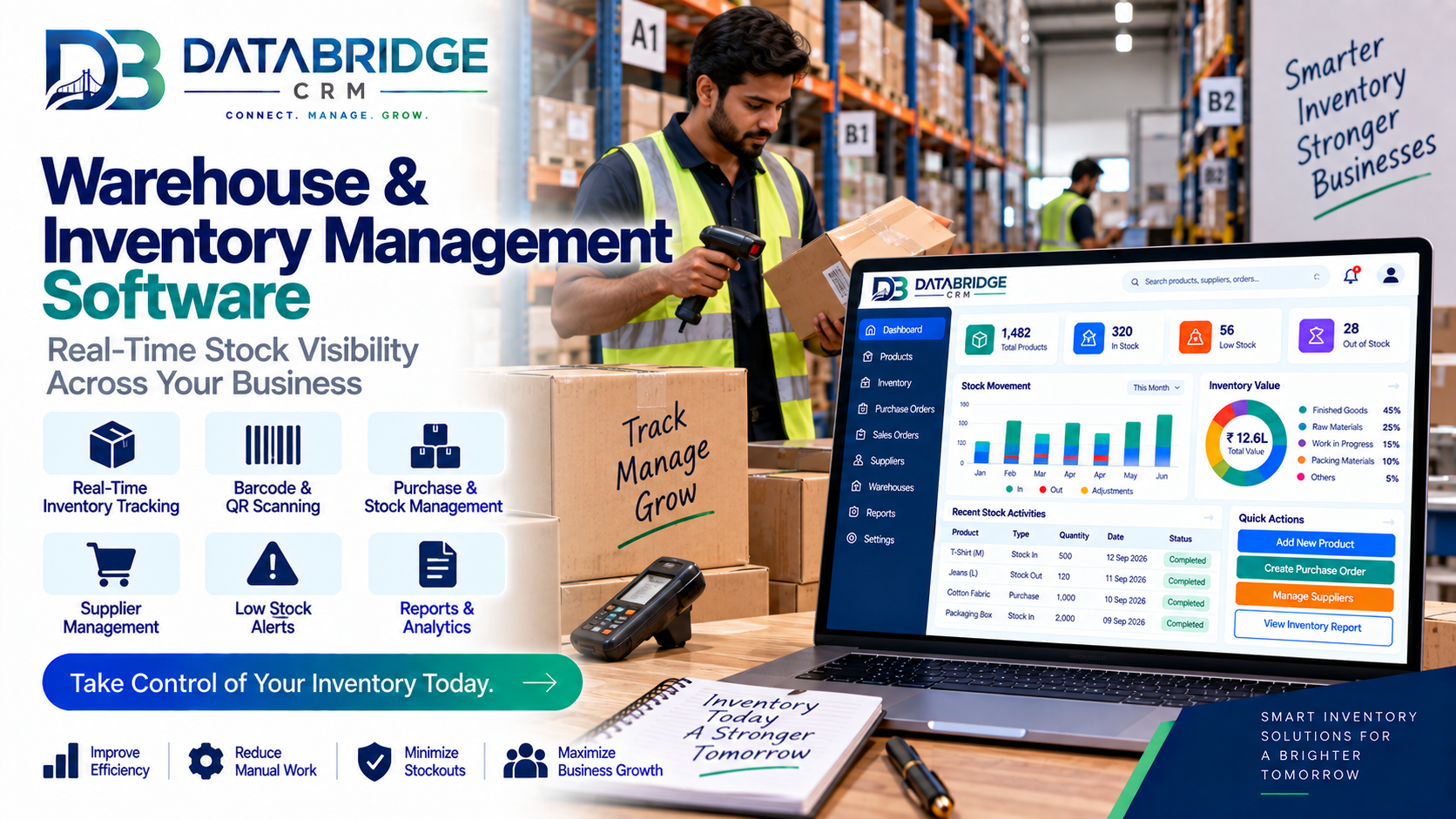
Businesses managing physical inventory — whether a single storeroom or a full warehouse operation — face a persistent balancing act: too little stock leads to missed sales, while too much ties up working capital unnecessarily. Warehouse and inventory management software exists to give businesses the real-time visibility needed to strike this balance consistently, rather than relying on periodic manual stock counts.
Why Manual Inventory Tracking Creates Ongoing Problems
Businesses tracking inventory manually commonly face inaccurate stock counts that drift from reality between periodic physical counts, stockouts on fast-moving items because there's no automated alert before stock runs critically low, overstocking of slow-moving items that ties up capital and storage space unnecessarily, and difficulty tracking inventory accurately across multiple storage locations or warehouses.
Core Features of Warehouse & Inventory Management Software
- Real-time stock tracking — inventory levels updated automatically with every sale, purchase, or transfer, rather than relying on periodic manual counts
- Low-stock alerts & automated reordering — flagging items approaching reorder thresholds, preventing stockouts on critical or fast-moving items
- Multi-location inventory visibility — tracking stock across multiple warehouses or storage locations from a single dashboard
- Barcode/batch tracking — accurate, fast stock updates through barcode scanning rather than manual data entry, reducing both time and error
- Purchase order management — tracking orders placed with suppliers against what's actually received, catching discrepancies early
- Inventory analytics — understanding which items move fastest, which are slow-moving, and where capital is unnecessarily tied up in excess stock
Why Real-Time Visibility Changes Purchasing Decisions
Businesses making purchasing decisions based on outdated or inaccurate stock data end up either over-ordering (wasting capital) or under-ordering (risking stockouts). Real-time inventory data gives purchasing decisions a much more reliable foundation, directly improving both cash flow and product availability.
The Hidden Cost of Excess Inventory
Overstocked, slow-moving inventory isn't just an inconvenience — it represents capital that could otherwise be used elsewhere in the business, along with ongoing storage costs and, for perishable or time-sensitive goods, the risk of eventual write-off. Inventory analytics that surface slow-moving stock give businesses the data needed to address this proactively, rather than discovering the problem during an annual stock audit.
Why Multi-Location Businesses Need This Most
A single-location business can sometimes manage with periodic manual counts, even if imperfectly. A business operating across multiple warehouses or storage locations without centralized visibility often ends up with imbalanced stock — excess in one location while another faces shortages of the same item — a problem that real-time, centralized inventory data directly solves.
Why an Integrated System Helps
DataBridgeCRM's inventory tools are built into the same platform as its POS, ERP, and industry-specific CRM modules, so inventory data stays connected to sales and purchasing rather than requiring a separate standalone inventory system disconnected from the rest of business operations.
See how it works for your business. Talk to a DataBridge consultant or book a free demo.

