
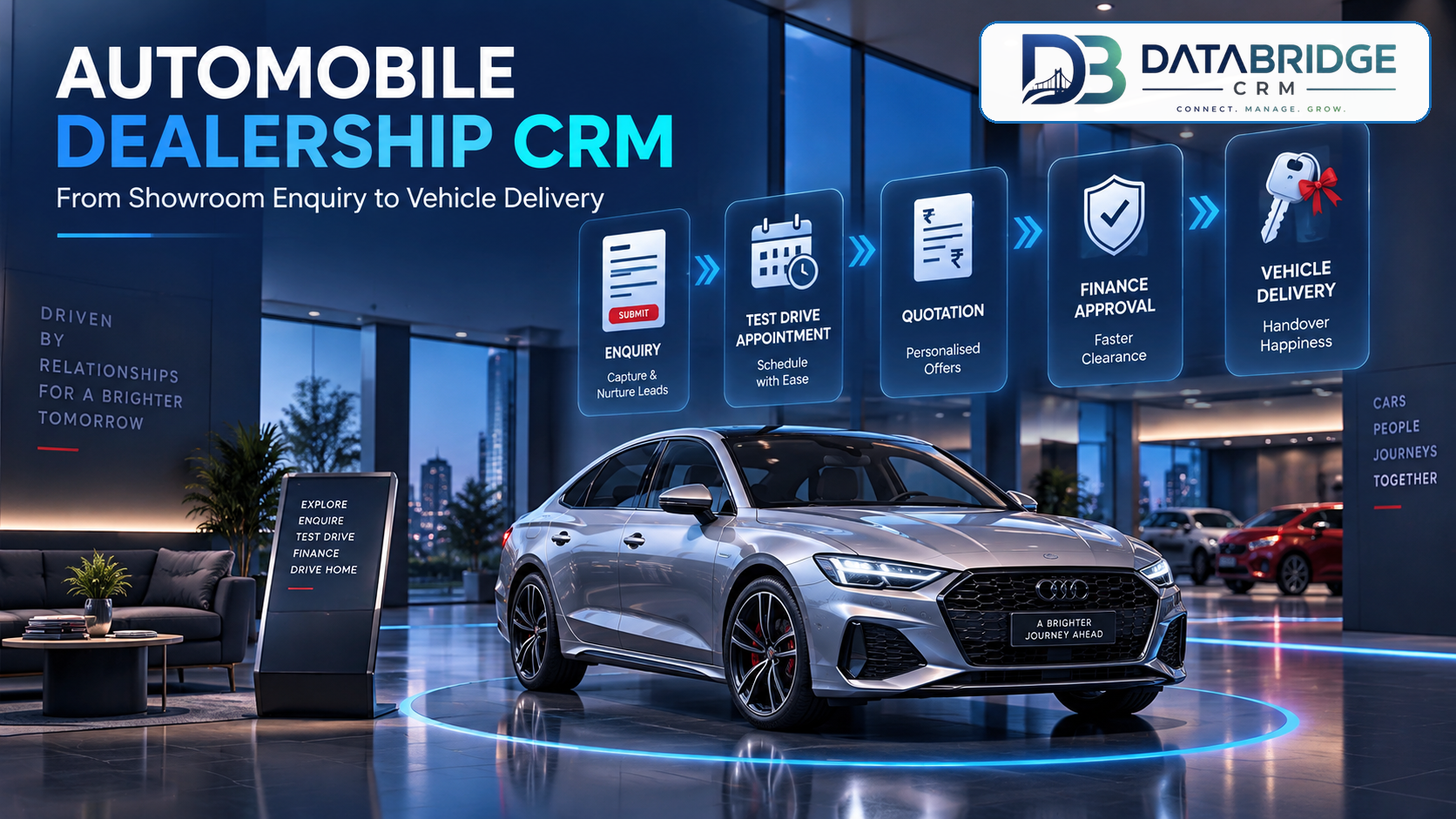
Selling a vehicle involves a longer, more relationship-driven journey than most retail purchases — a showroom enquiry, a test drive, financing discussions, and eventually delivery, often stretching across several visits and follow-up calls. Automobile dealership CRM software exists to keep this entire journey organized, rather than relying on a sales executive's personal notes and memory.
Why Dealerships Lose Sales to Poor Follow-Up
Without a structured system, dealership sales teams commonly lose track of walk-in enquiries that weren't converted on the first visit, fail to follow up consistently with customers still comparing options, have no visibility into which sales executive is handling which lead, and struggle to coordinate financing, paperwork, and delivery timelines across departments.
Core Features of an Automobile Dealership CRM
- Lead capture across channels — enquiries from showroom walk-ins, phone calls, and online forms consolidated into one pipeline
- Test drive & follow-up scheduling — tracking every test drive booked and ensuring a follow-up happens afterward, rather than letting interested buyers go cold
- Vehicle inventory visibility — real-time stock of available models, variants, and colors, so sales staff aren't offering vehicles that aren't actually available
- Financing & documentation tracking — keeping loan processing and paperwork status visible so delivery isn't delayed by missing documents
- Delivery scheduling — coordinating final delivery dates and pre-delivery inspection status
- Post-sale service reminders — automated reminders for scheduled service visits, keeping the customer relationship active well beyond the sale
Why the Sales Cycle Length Makes CRM Essential
A typical vehicle purchase decision doesn't happen in a single visit — buyers often compare multiple dealerships and models before committing. The dealership that stays consistently in touch, without becoming pushy, has a meaningfully better chance of closing the sale than one that only follows up sporadically or not at all.
Turning a One-Time Sale Into a Long-Term Relationship
A vehicle sale isn't the end of the relationship — service visits, accessory purchases, and eventual trade-ins or upgrades are all future revenue opportunities. A CRM that tracks the full customer relationship, not just the initial sale, makes it possible to bring customers back for service and future purchases through timely, automated reminders.
Why a Connected System Beats Manual Tracking
Dealerships running sales tracking on a whiteboard or spreadsheet, separate from service records and delivery coordination, lose the full picture of each customer relationship. DataBridgeCRM's approach to sales-and-service-cycle industries brings lead tracking, inventory, and post-sale service reminders into a single system, so dealerships don't lose visibility as a buyer moves from enquiry to delivery to ongoing service.
See how it works for your dealership. Talk to a DataBridge consultant or book a free demo.

