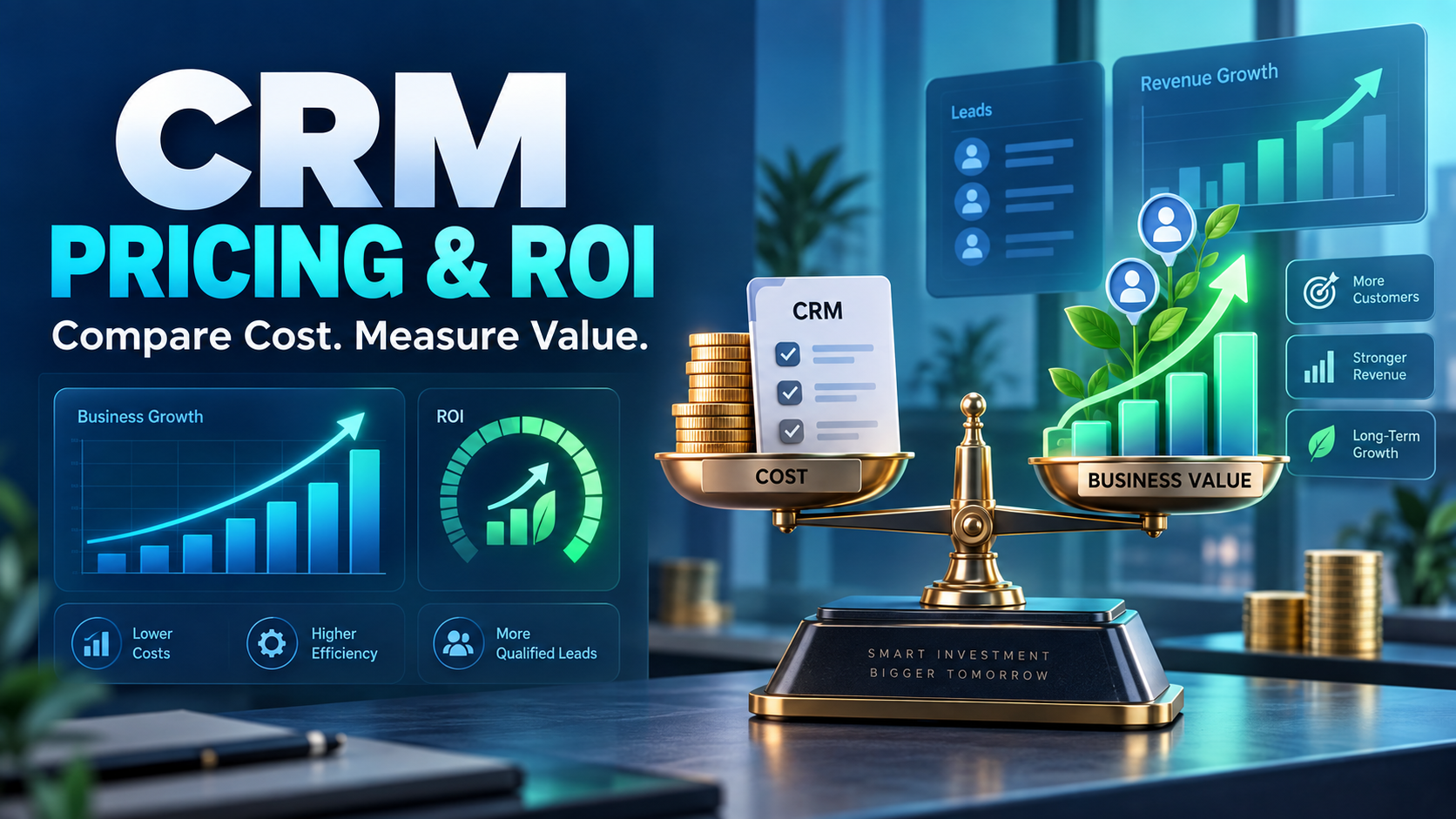
Business owners evaluating CRM software often focus almost entirely on the subscription price, comparing platforms purely on cost per month. This misses the more important question: what is this software actually worth to the business once it's properly adopted? Understanding CRM pricing for small business requires looking at return, not just cost.
Why Comparing Subscription Price Alone Is Misleading
A cheaper CRM that lacks essential features a business actually needs often ends up costing more in the long run — through lost leads, manual workarounds, or the eventual cost of switching to a better platform once the gaps become obvious. Price should be evaluated against what the platform actually delivers, not in isolation.
What CRM ROI Actually Looks Like
Leads That Would Otherwise Be Lost
Every lead that gets a timely, tracked follow-up instead of falling through the cracks represents real, recoverable revenue. For most businesses without a CRM, this is one of the largest hidden costs a CRM directly addresses.
Time Saved on Manual Work
Automating follow-ups, reminders, and reporting that would otherwise require manual staff time translates directly into either cost savings or freed-up capacity for higher-value work.
Better Decision-Making From Real Data
Visibility into which leads convert, which marketing channels actually work, and where the sales process breaks down enables better decisions than guessing based on incomplete information.
Reduced Tool Sprawl
A CRM that combines customer management with billing, marketing, and communication tools replaces what would otherwise be several separate subscriptions — the combined cost of those disconnected tools is often higher than a single unified platform.
How to Actually Estimate CRM ROI for Your Business
- Estimate leads currently being lost to inconsistent follow-up or disorganization — even a rough estimate reveals real recoverable revenue
- Calculate staff time spent on manual tasks a CRM would automate — follow-up reminders, data entry, report compilation
- Add up the cost of tools you're currently paying for separately that a unified platform could replace
- Compare this total recoverable value against the CRM's actual cost, not just the sticker price in isolation
Why Pricing Structure Matters as Much as the Number
A CRM priced per user can become unexpectedly expensive as a team grows, while a flat-rate, all-in-one pricing structure offers more predictability for a small business planning its budget. Understanding how pricing scales — not just today's cost, but next year's — matters as much as the current number.
What "Affordable" Should Actually Mean
Affordable doesn't mean cheapest — it means the platform delivers enough real value relative to its cost that adopting it is a clearly positive decision for the business, not a expense to be minimized regardless of what's given up in return.
DataBridgeCRM's Pricing Approach
DataBridgeCRM is priced at roughly ₹50/day, combining CRM, ERP, billing, marketing tools, and AI features into one flat-rate platform — designed specifically so small businesses get predictable, all-inclusive pricing instead of per-user costs that grow unpredictably, or a patchwork of separate subscriptions that add up to more than a unified platform would cost.
See What CRM ROI Actually Looks Like for Your Business
If you're weighing whether CRM software is worth the cost, book a free demo of DataBridgeCRM and see what a connected platform could realistically save and recover for your business.

