
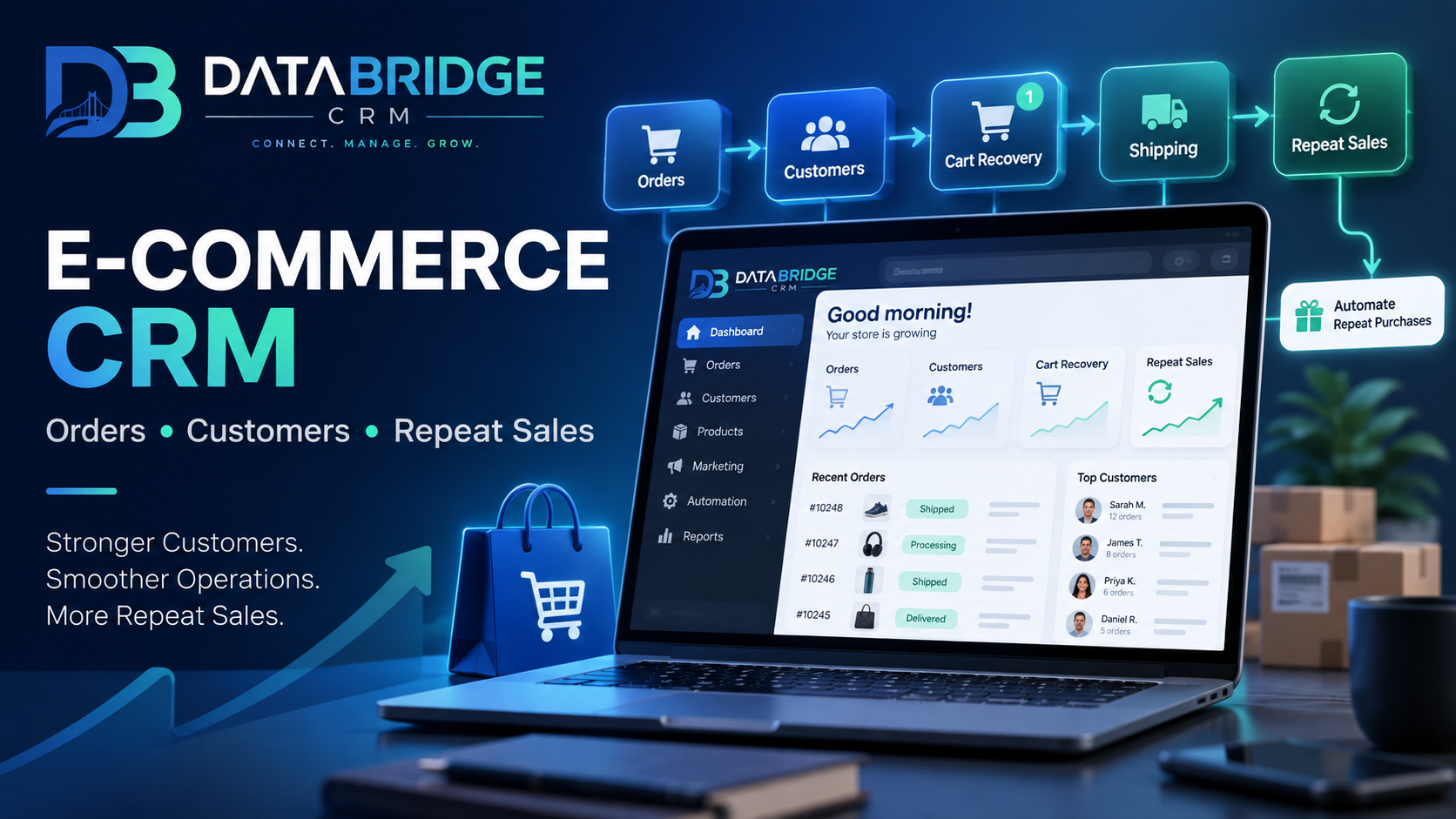
Running an online store involves far more than just processing orders — tracking customer preferences, managing repeat buyers, handling returns, and running promotions all compete for attention. As order volume grows, many store owners find that the basic tools built into their e-commerce platform aren't enough to actually manage customer relationships at scale. That's where a dedicated e-commerce CRM comes in.
Why Basic Store Tools Aren't Enough
Most e-commerce platforms are built to process transactions, not manage relationships. They can tell you what was ordered, but not which customers are most valuable, who's likely to churn, or which segment responds best to a discount campaign. Without this layer, marketing becomes guesswork rather than a data-driven strategy.
Core Features of E-commerce CRM Software
- Unified customer profiles — every customer's order history, preferences, and support interactions in one view
- Order & fulfillment tracking — visibility into every order's status from placement to delivery
- Abandoned cart recovery — automated reminders to customers who added items but didn't check out
- Segmented marketing campaigns — targeting repeat buyers, high-value customers, or lapsed customers differently instead of one-size-fits-all promotions
- Returns & support management — tracking complaints and returns against the right order and customer
- Sales & customer analytics — understanding which products and customer segments actually drive revenue
Turning First-Time Buyers Into Repeat Customers
Acquiring a new customer typically costs far more than retaining an existing one, yet many online stores focus almost entirely on new customer acquisition. An e-commerce CRM flips this by making it easy to identify repeat-purchase opportunities — sending a restock reminder, a loyalty discount, or a "customers who bought this also bought" follow-up automatically based on actual purchase behavior.
Connecting Marketing Channels to One Customer View
Running WhatsApp broadcasts, email campaigns, and on-site promotions without a shared customer database means each channel operates blind to what the others are doing. An integrated e-commerce CRM connects all of this — so a customer who just received a WhatsApp offer isn't also getting an unrelated email campaign the same day.
Why DataBridgeCRM Fits Growing Online Stores
DataBridgeCRM's E-commerce CRM module combines order tracking, customer segmentation, and marketing automation (WhatsApp and email) on a single platform — along with the option to build or connect a storefront through the same system, so store owners aren't managing customer data across five disconnected tools.
Getting Started
If your online store's marketing today is limited to occasional broadcast messages with no real targeting, that's usually the clearest sign a dedicated CRM layer would meaningfully increase repeat sales without needing more ad spend.
See how it works for your online store. Explore the E-commerce CRM module or book a free demo.

