
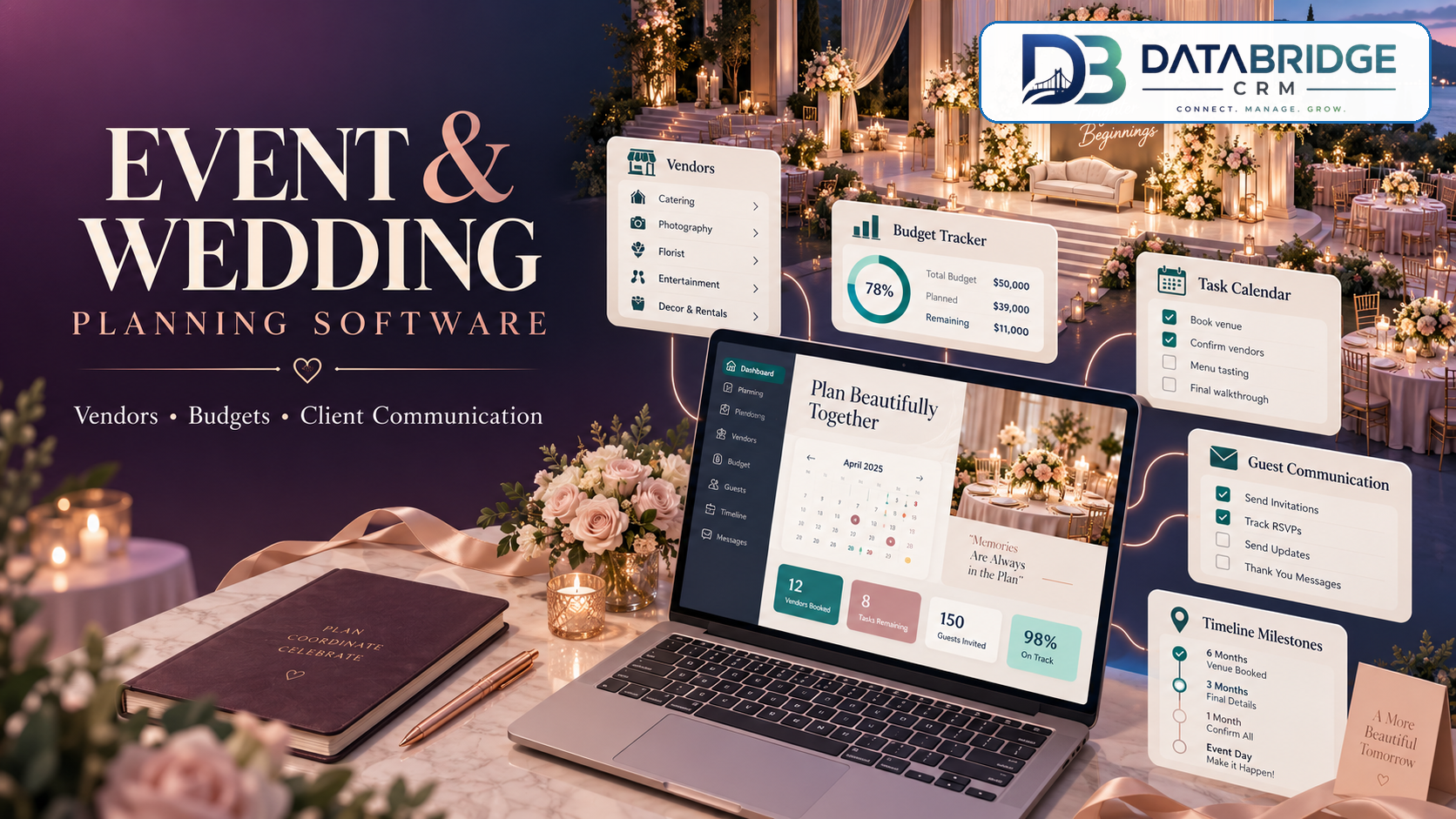
Planning a wedding or a large event means coordinating dozens of moving parts simultaneously — venues, caterers, decorators, photographers, budgets, and a client who wants regular updates on how everything is progressing. Event management software exists to bring structure to this complexity, replacing scattered spreadsheets, WhatsApp groups, and physical checklists with one connected system.
Why Manual Event Planning Breaks Down at Scale
Event planners managing multiple events simultaneously, each with dozens of vendors and a detailed timeline, commonly struggle with tracking which vendor payments are due and which have been made, keeping client budgets from silently drifting over without anyone noticing until it's too late, and coordinating updates across a client, multiple vendors, and an internal team without information getting lost or duplicated.
Core Features of Event Management Software
- Vendor management — tracking every vendor involved in an event, their contracts, payment schedules, and deliverables in one place
- Budget tracking — a live view of planned versus actual spend, catching budget overruns early rather than discovering them at the final invoice
- Timeline & task management — a shared checklist and schedule so nothing — from venue booking deadlines to final decor setup — falls through the cracks
- Client communication & updates — keeping clients informed on progress without requiring constant individual phone calls or scattered WhatsApp threads
- Multi-event dashboard — for planners running several events concurrently, a consolidated view of every event's status at a glance
- Document & contract storage — vendor agreements, client contracts, and permits stored and accessible in one place rather than scattered across email and physical files
Why Budget Visibility Matters Most
The most common source of client dissatisfaction in event planning isn't a missed vendor detail — it's a budget that quietly grew beyond what was agreed, discovered only at final billing. Software that tracks spend against budget in real time lets planners flag overruns early enough to adjust, rather than delivering an unwelcome surprise at the end.
Why Client Communication Needs Structure
Clients planning a major event — especially a wedding — want regular reassurance that things are on track. A structured communication system, with scheduled updates and a clear record of decisions made, reduces the anxiety-driven check-in calls that consume a planner's time and instead builds client confidence proactively.
Why an Integrated Platform Helps Event Businesses Scale
Event planners who want to grow beyond a handful of events at a time need a system that keeps vendor coordination, budgets, and client communication connected — rather than juggling separate spreadsheets and chat threads for each event. DataBridgeCRM's project- and client-relationship tools can be applied to exactly this kind of multi-stakeholder, deadline-driven business.
See how it works for your event planning business. Talk to a DataBridge consultant or book a free demo.

