
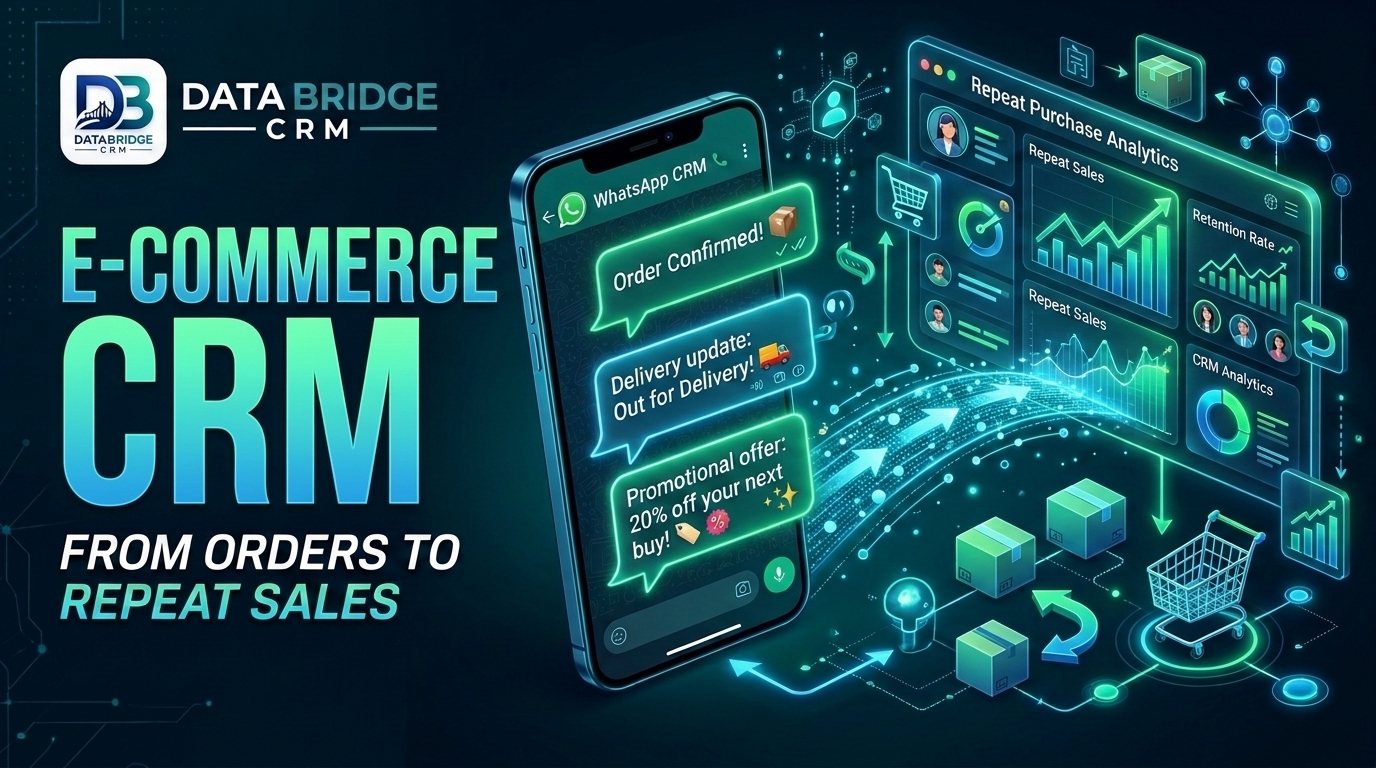
WhatsApp CRM for E-commerce: From Orders to Repeat Sales
In India, customers respond quickly on WhatsApp, which makes it a powerful channel for online stores. Used well with a CRM, it improves order confirmation, reduces failed deliveries and brings customers back. This guide explains WhatsApp CRM for ecommerce: what to send, when to send it and how to stay within the rules.
The Customer Journey on WhatsApp
- Order confirmation with items and delivery estimate
- COD confirmation for risky or high-value orders
- Dispatch and tracking updates
- Delivery confirmation and care or usage tips
- Review request
- Repeat-purchase or refill reminder
Follow Consent and Platform Rules
Use the official WhatsApp Business platform, collect clear consent, use approved message templates where required and make opt-out easy. Avoid unsolicited bulk messaging. Respecting rules protects your number and your brand.
Reduce COD Problems
Send a quick message asking the customer to confirm the order and address. Orders that are not confirmed can be held or called before dispatch. This reduces fake orders and failed deliveries.
Recover Abandoned Carts
Send a helpful reminder with the cart items and a direct link. Answer common questions such as size, delivery time or return policy. Use offers only where they make business sense.
Segment Before You Broadcast
- New customers: usage tips and a review request
- Repeat customers: new arrivals in their category
- High-value customers: early access
- Inactive customers: a gentle win-back message
- Offline customers: if you also sell in a store, link them using your billing records
If you run a physical store, connecting billing POS software India data with online orders gives one view of each customer.
Support on WhatsApp
Customers like quick answers. Use a shared inbox so several team members can reply, with saved responses for common questions and clear escalation for refunds and complaints. Log every conversation in the CRM.
Measure Results
- Message delivery and reply rates
- COD confirmation rate
- Cart recovery rate
- Repeat purchase rate from WhatsApp campaigns
- Opt-out rate
CRM, ERP and POS: How They Fit Together
CRM, ERP and POS are often mentioned together, which can confuse buyers. A CRM manages customers, enquiries, follow-ups and communication. A POS handles billing at the counter. ERP software covers back-office processes such as purchasing, inventory, accounts and HR. In a small e-commerce business, a CRM with billing and inventory features is usually enough at the start. As you add branches, staff and suppliers, ERP-style modules become useful, so choose a platform that lets you add modules over time.
How Data Drives Growth
Once your team records every customer interaction, patterns appear. You can see which services or products sell most, which months are slow, which staff member closes the most enquiries and which customers have not returned for a long time. These insights help you plan stock, staffing, offers and advertising with confidence instead of guesswork.
Helping Your Team Adopt the System
The best software fails if people avoid it. Explain how the change helps each person, train in short sessions by role, appoint one internal champion and review usage weekly in the first month. Celebrate early wins, such as a missed enquiry recovered through a reminder, and make sure owners use the reports themselves, because staff follow what managers check.
Key Takeaways
- Focus on one area at a time: the customer journey on whatsapp
- Focus on one area at a time: follow consent and platform rules
- Focus on one area at a time: reduce cod problems
- Focus on one area at a time: recover abandoned carts
- Focus on one area at a time: segment before you broadcast
Progress comes from consistent small improvements that your whole team follows, not from a single big change.
Your 4-Week Action Plan
Week 1: Understand
Write down how work currently flows in your e-commerce business. Note delays, repeated entry and missed follow-ups, and choose the one problem that costs you the most.
Week 2: Organise
Clean your customer and operational data, define roles and decide the simple rules your team will follow, such as response time and reminder timing.
Week 3: Implement
Set up the workflow in your software, train staff by role and run it alongside your old process for a few days to catch gaps.
Week 4: Review
Look at your numbers, collect feedback from staff and customers and adjust. Then move on to the next problem on your list.
Eight Things to Check When Choosing Software
- It fits your type of business and your sub-niche, not just a generic model
- Your team can learn it quickly, including on mobile
- You can import existing data from Excel or other tools
- Reminders, reports and user roles are configurable
- Integrations such as WhatsApp, payments and your website are available
- Data is backed up and access is controlled
- Training and support are available in a language your team prefers
- Pricing is transparent and the system can grow as you add users or branches
Business Software for Jaipur and Across India
Whether you are exploring CRM software Jaipur, ERP software Jaipur or CRM software for small business India, the best choice is the one your team will use every day. Businesses in Jaipur, Rajasthan and the rest of India often run lean teams, serve both walk-in and online customers and need software that is quick to learn, affordable and supported locally. Start with the processes described above, choose a platform that can grow with you and add modules only when the need is clear.
How DataBridge CRM Can Help Your E-commerce Business
DataBridge CRM (databridgecrm.com) is a business software platform that helps growing companies manage customers, enquiries, follow-ups, communication and reports in one place. For e-commerce businesses, it can be configured around the workflows in this article, with reminders, user roles, dashboards and reports that match how your team works.
- Capture and organise customer information in a single system
- Automate reminders and follow-ups so nothing is forgotten
- Give owners clear reports and give staff clear daily task lists
- Start with core features and add more as your business grows
Want to see it on your own use case? Book a free demo at databridgecrm.com and the team will walk you through a setup suited to your business.
Frequently Asked Questions
Can I send promotions on WhatsApp?
Yes, using the official business channel with consent and approved templates where required.
Is WhatsApp better than SMS?
It often gets better engagement, but many stores use both.
Do I need a separate number?
Many businesses use a dedicated business number for WhatsApp.
How many messages should I send?
Start with useful transactional messages and add promotions carefully.
Can I try DataBridge CRM before buying?
You can request a demo at databridgecrm.com to see how the platform fits your workflow before you decide.
Ready to get started? Visit databridgecrm.com and talk to the team today.

