
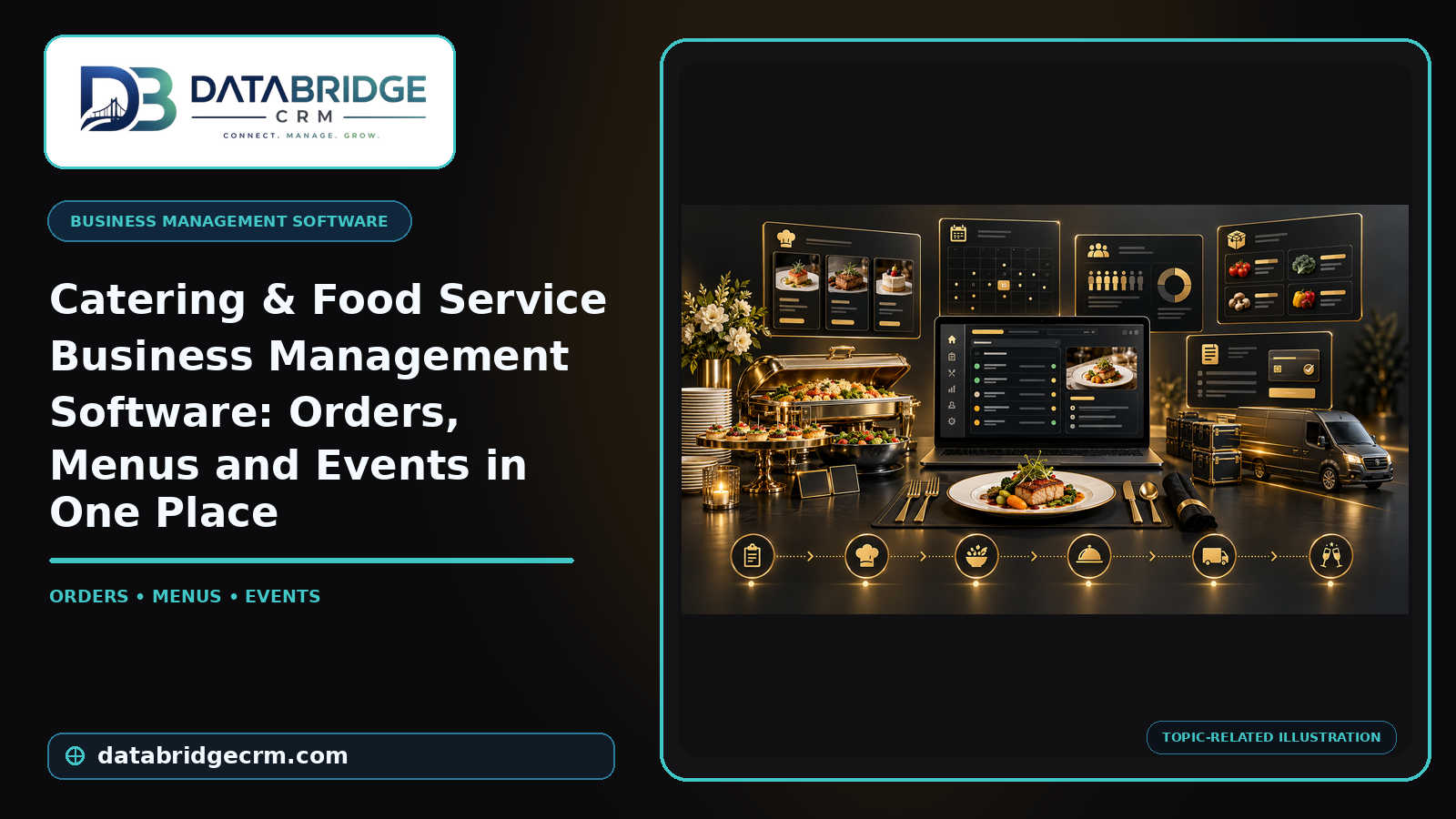
Catering businesses operate under a unique pressure — every event has a fixed date that can't be moved, requires precise planning around guest counts and menu choices, and depends on coordinating kitchen production, staff, and delivery logistics to come together perfectly on a single day. Catering management software exists to bring structure to this high-stakes coordination.
Why Manual Catering Coordination Creates Real Risk
Catering businesses managing bookings and event details manually commonly struggle with tracking multiple simultaneous event bookings and their individual requirements clearly, coordinating menu selections, guest counts, and special dietary requests accurately across events, planning kitchen production and staffing against a calendar of upcoming events, and managing payment schedules for events that are often booked and paid for well in advance.
Core Features of Catering Management Software
- Event booking & calendar management — tracking every booked event with its date, guest count, and specific requirements in one centralized calendar
- Menu & order customization — recording specific menu selections and special requests (dietary restrictions, custom dishes) accurately per event
- Guest count & quantity planning — calculating ingredient and preparation quantities based on confirmed guest counts, reducing both shortages and wasteful over-preparation
- Staff & logistics scheduling — coordinating kitchen staff, service staff, and delivery logistics against the event calendar
- Payment & advance tracking — managing deposits, installment payments, and final balances for events typically booked well in advance of the actual date
- Vendor & supply coordination — tracking ingredient and supply orders against upcoming event requirements
Why Precision Matters More in Catering Than Most Food Businesses
Unlike a restaurant that can adjust in real time to daily demand, a catering event has a fixed date and guest count that can't be renegotiated on the day — errors in menu recording, quantity planning, or scheduling become visible and costly precisely when there's no room to recover. Structured, accurate tracking is essential, not optional, for this business model.
Why Managing Multiple Simultaneous Events Requires a System
A catering business handling one event at a time can manage reasonably well through informal coordination. Once multiple events are booked for overlapping or nearby dates, informal tracking becomes genuinely risky — a centralized system ensures no event's specific requirements get confused with another's.
Why Payment Tracking Matters for Cash Flow
Catering payments are often structured as a deposit followed by installments and a final balance, spread across the weeks or months leading up to an event. Clear tracking of what's been collected and what's outstanding, across many simultaneous bookings, is essential for maintaining healthy cash flow in a business with this payment structure.
Why an Integrated System Helps Catering Businesses Grow
DataBridgeCRM's booking, billing, and event coordination tools apply directly to catering businesses, connecting event details, menu planning, payment tracking, and logistics into one system rather than the scattered notebooks and spreadsheets many catering businesses currently coordinate through.
See how it works for your catering business. Talk to a DataBridge consultant or book a free demo.

