
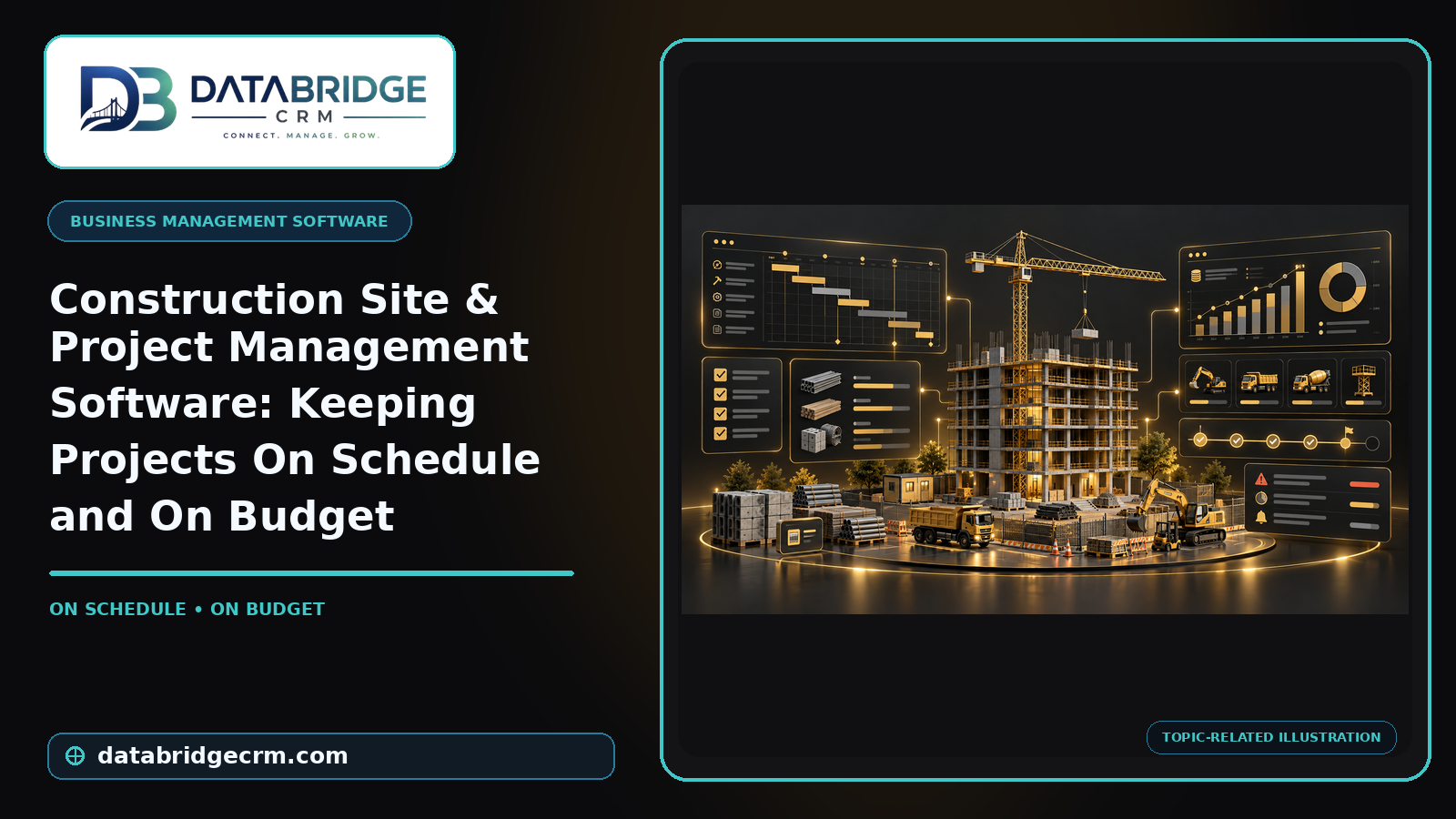
Construction projects involve a level of on-the-ground operational complexity that's genuinely difficult to manage from a spreadsheet — labor coordination, material deliveries, progress tracking against a schedule, and budget monitoring, often across multiple simultaneous sites. Construction site management software exists to bring real-time visibility to this complexity.
Why Manual Site Management Leads to Delays and Overruns
Contractors and builders managing sites manually commonly struggle with getting timely, accurate updates on actual site progress versus what's on paper, tracking material deliveries and usage against what was planned, coordinating labor across multiple sites or work crews efficiently, and catching budget overruns early enough to actually address them rather than discovering them at project completion.
Core Features of Construction Site Management Software
- Progress tracking against schedule — recording actual construction progress against the planned timeline, making delays visible early rather than discovered only at a missed milestone
- Material tracking — monitoring material deliveries, usage, and remaining stock against what was planned for each phase of construction
- Labor & contractor management — tracking labor attendance, contractor assignments, and work completed across one or multiple active sites
- Budget tracking — monitoring actual spend against the planned budget in real time, flagging overruns while there's still time to course-correct
- Site documentation & photo records — maintaining a visual, dated record of site progress, useful for both internal tracking and client or stakeholder updates
- Multi-site dashboard — for contractors or builders managing several active sites, a consolidated view of status across every project
Why Real-Time Progress Visibility Prevents Costly Delays
When site progress is only known through periodic physical visits or verbal updates, delays often go unnoticed until they've already impacted the broader project timeline. Software that captures progress data regularly allows project managers to identify and address slippage early, before it cascades into a significant schedule delay.
Why Material Tracking Protects Margins
Construction material costs represent a significant share of project budgets, and both material shortages (halting work) and over-ordering (wasting capital) directly hurt project economics. Accurate tracking of material usage against planned quantities helps catch either problem before it becomes expensive.
Managing Multiple Sites Without Losing Control
A single active construction site can sometimes be managed reasonably well through informal tracking. A contractor or builder running several simultaneous projects without centralized visibility risks losing track of which sites are on schedule and which are quietly falling behind, often discovering problems only when a client or stakeholder raises a concern.
Why an Integrated System Helps Construction Businesses
DataBridgeCRM's project tracking, budget monitoring, and multi-location management tools apply directly to construction and contracting businesses, bringing site progress, material tracking, and budget visibility into one system rather than the scattered spreadsheets and site-visit notes most such businesses currently rely on.
See how it works for your construction or contracting business. Talk to a DataBridge consultant or book a free demo.

