
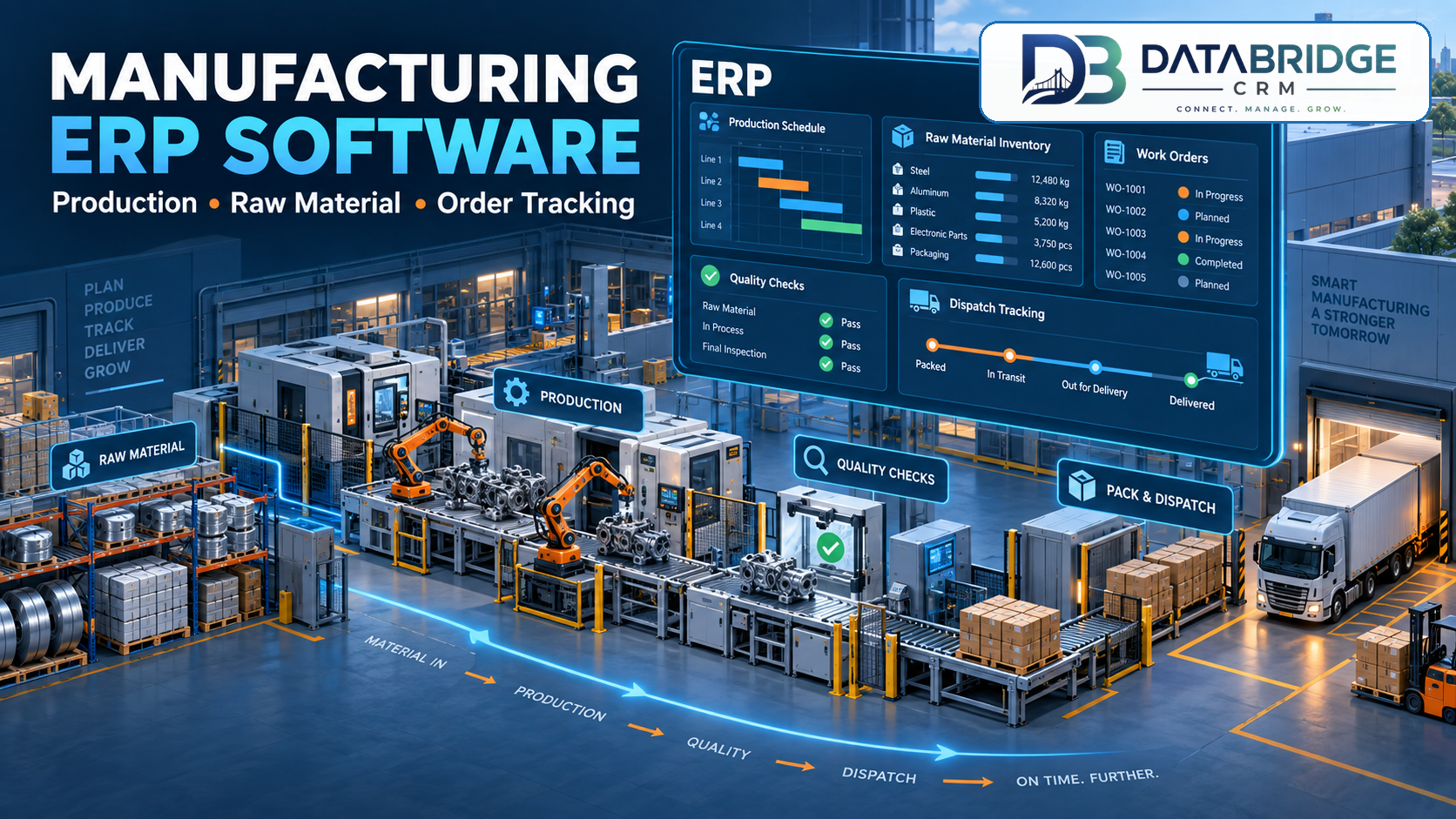
Manufacturing businesses juggle a layer of operational complexity that most service or retail businesses don't face — raw material procurement, production scheduling, work-in-progress tracking, and finished goods inventory, all of which need to stay coordinated to avoid either production delays or costly material waste. Manufacturing ERP software exists to connect these stages into one system.
The Cost of Disconnected Manufacturing Operations
Manufacturers managing procurement, production, and inventory as separate, manually coordinated processes commonly face raw material shortages that halt production because purchasing wasn't aware stock was running low, over-ordering of materials that then sit unused, tying up working capital, no clear visibility into which orders are on schedule and which are falling behind, and difficulty tracing where exactly in the production process a specific order currently stands.
Core Features of Manufacturing ERP Software
- Raw material inventory tracking — real-time visibility into material stock, with automatic alerts before shortages disrupt production
- Bill of Materials (BOM) management — tracking exactly what raw materials and quantities go into each finished product, keeping procurement aligned with actual production needs
- Production scheduling & tracking — visibility into where each order stands in the production process, from raw material to finished goods
- Order & customer management — linking production directly to customer orders, so manufacturing priorities reflect actual demand rather than guesswork
- Quality control tracking — recording inspection results at key production stages to catch defects before they reach the customer
- Cost tracking — understanding true production cost per unit, including material, labor, and overhead, rather than relying on rough estimates
Why BOM Accuracy Drives Everything Else
An inaccurate Bill of Materials creates a ripple effect through the entire operation — procurement orders the wrong quantities, production runs short of materials mid-process, and cost calculations become unreliable. Getting BOM data accurate and centrally maintained is one of the highest-leverage improvements a manufacturer can make when adopting ERP software.
Connecting Production to Real Demand
Manufacturing without a clear link between customer orders and production scheduling often results in either producing goods that aren't immediately needed (tying up capital and storage) or scrambling to fulfill unexpected demand. ERP software that connects order intake directly to production planning helps manufacturers produce closer to actual demand rather than working from rough forecasts.
Why Real-Time Visibility Reduces Delays
When production status is only known by physically checking the shop floor, delays often go unnoticed until they've already impacted a delivery deadline. Software that gives real-time visibility into where every order stands allows managers to catch and address delays early, before they cascade into missed customer commitments.
Why an Integrated System Beats Spreadsheets
DataBridgeCRM's ERP capabilities extend to manufacturing operations, connecting raw material inventory, production tracking, and order management in one system — replacing the disconnected spreadsheets and manual shop-floor checks that most small and mid-size manufacturers still rely on.
See how it works for your manufacturing business. Talk to a DataBridge consultant or book a free demo.

