
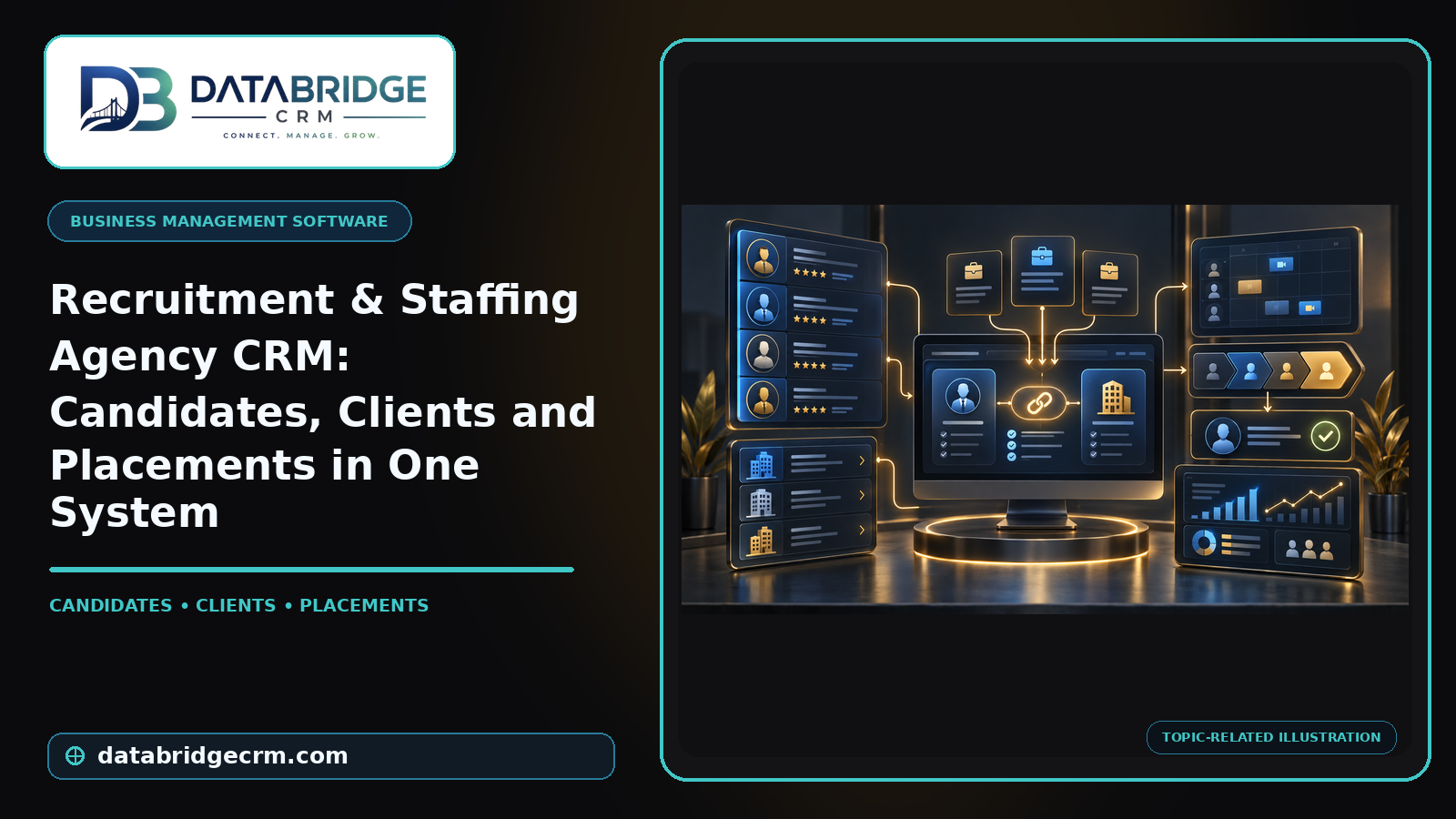
Recruitment and staffing agencies manage a genuinely two-sided business — candidates looking for opportunities on one side, client companies with specific hiring requirements on the other — and success depends on matching the two accurately and quickly. A recruitment CRM exists to manage both sides of this relationship in one connected system, rather than tracking candidates and clients separately.
Why Recruitment Agencies Need More Than a Basic Contact List
Agencies managing candidates and client requirements through spreadsheets or a generic contact list commonly struggle with matching the right candidates to the right roles quickly as new requirements come in, losing track of where a specific candidate stands in a hiring process across multiple simultaneous client engagements, maintaining an organized, searchable candidate database that grows more valuable over time, and demonstrating clear value to clients through timely updates on search progress.
Core Features of Recruitment & Staffing CRM Software
- Candidate database & profile management — a searchable database of candidates with skills, experience, and availability, making it possible to quickly identify fits for new requirements
- Client requirement tracking — every open role tracked with its specific requirements, status, and timeline
- Pipeline & stage tracking — visibility into where each candidate stands in a specific hiring process — sourced, screened, interviewed, offered — across every active search simultaneously
- Automated candidate communication — status updates and follow-ups sent to candidates automatically, keeping them engaged without requiring manual outreach for every update
- Client reporting — clear, professional progress reports for clients on active searches, demonstrating value and maintaining trust throughout often lengthy hiring processes
- Placement & billing tracking — tracking successful placements and associated billing, tied directly to the client relationship
Why Speed of Matching Directly Affects Revenue
In recruitment, a strong candidate is often being considered by multiple opportunities simultaneously — an agency that's slow to match and present a qualified candidate risks losing them to a faster-moving competitor or a direct hire by the client company. A well-organized, searchable candidate database directly improves matching speed compared to relying on memory or scattered files.
Building Long-Term Value From the Candidate Database
A recruitment agency's candidate database is a genuine long-term asset — a candidate not right for one role today might be an excellent fit for a different client's requirement next month. Software that keeps this database organized and searchable turns it into a compounding advantage, rather than a static list that becomes progressively harder to use as it grows.
Why Client Communication Builds Retention
Clients paying for a recruitment search want visibility into progress, not just a final candidate presented weeks later with no interim updates. Regular, structured reporting on search progress builds the kind of trust that leads to repeat business and referrals, distinguishing an agency from one that goes quiet between the initial brief and a final candidate.
Why an Integrated System Helps Agencies Scale
DataBridgeCRM's customer relationship and pipeline tracking tools apply directly to recruitment and staffing agencies, managing both the candidate and client sides of the business in one connected system rather than juggling separate spreadsheets for each.
See how it works for your recruitment or staffing agency. Talk to a DataBridge consultant or book a free demo.

