
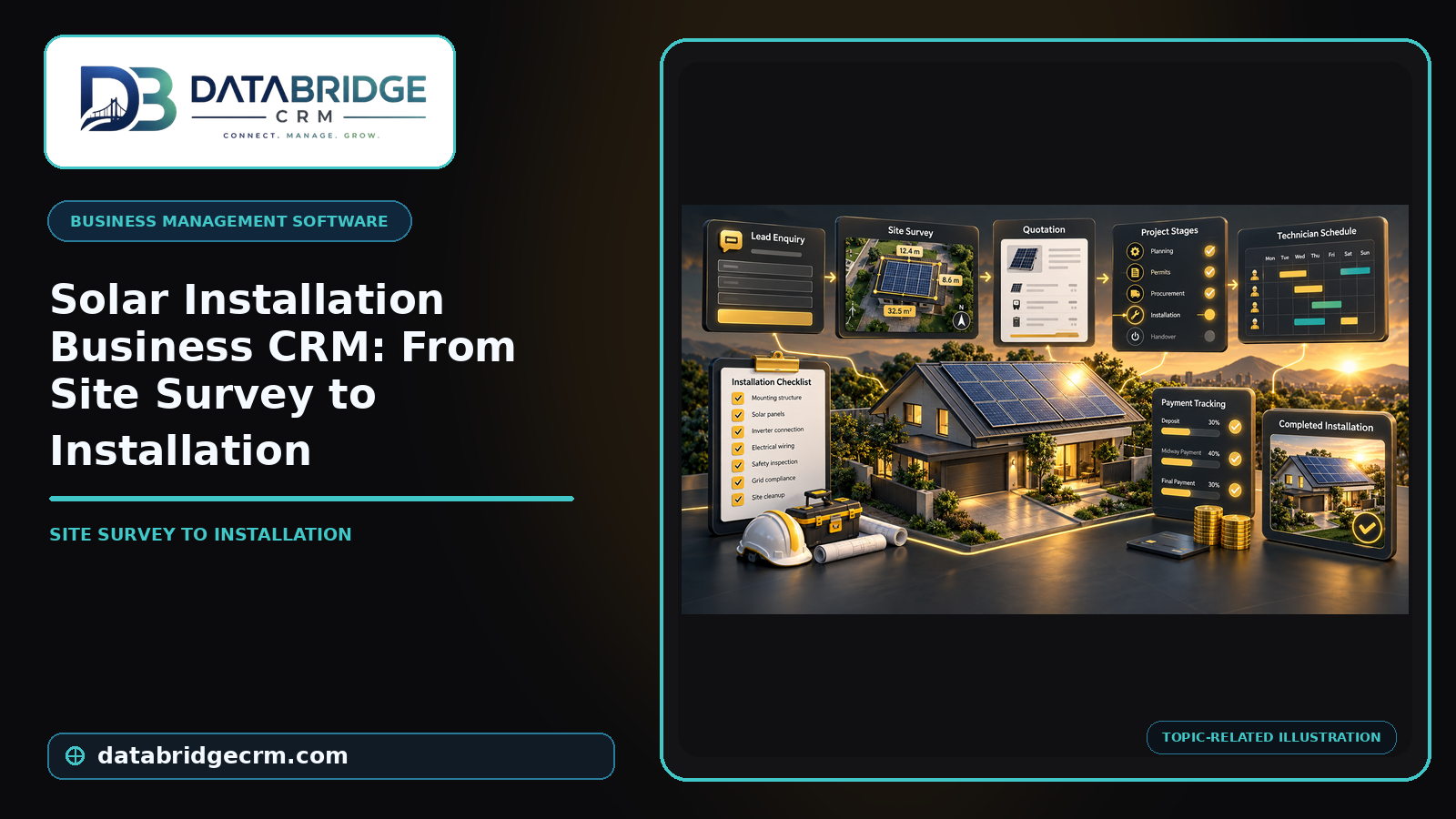
Selling and installing solar systems involves a longer, more technical sales journey than most home-services businesses — an initial enquiry, a site survey to assess feasibility, a detailed proposal, financing discussions, and finally installation and commissioning. Solar installation CRM software exists to keep this multi-stage journey organized from first contact through to a completed, functioning installation.
Why Manual Tracking Fails Solar Businesses
Solar companies managing this process manually commonly lose track of leads between the initial enquiry and site survey stages, struggle to coordinate site survey scheduling and technical assessment data consistently, have no clear visibility into where each customer stands across financing, approval, and installation stages, and find it difficult to manage installation team scheduling alongside a growing sales pipeline.
Core Features of Solar Installation CRM Software
- Lead & enquiry tracking — every enquiry captured and tracked from first contact, regardless of source (website, referral, walk-in)
- Site survey scheduling & data capture — coordinating survey visits and recording technical assessment data (roof condition, sunlight exposure, load requirements) against the customer record
- Proposal & quotation management — generating accurate, detailed proposals based on survey data, and tracking which stage each proposal is at
- Financing & subsidy tracking — for solar installations involving loans or government subsidy schemes, tracking documentation and approval status
- Installation scheduling & team coordination — managing installation team schedules and tracking project status through to commissioning
- Post-installation follow-up — tracking system performance check-ins and maintenance schedules, keeping the customer relationship active well beyond installation
Why the Multi-Stage Sales Process Needs Structure
A solar sale rarely closes on the first conversation — the technical assessment, financing discussion, and installation planning all take real time, during which a poorly followed-up lead easily goes cold. Structured tracking ensures every stage has a clear owner and next step, rather than relying on individual salespeople to remember where every customer stands.
Why Site Survey Data Needs to Be Properly Captured
The technical details gathered during a site survey directly inform the proposal, installation plan, and equipment sizing — losing or poorly recording this data leads to inaccurate proposals or installation issues discovered too late. Capturing this data systematically against each customer's record avoids this risk.
Turning Installation Into an Ongoing Relationship
A completed solar installation isn't necessarily the end of the customer relationship — system maintenance, performance monitoring check-ins, and potential referrals to neighbors or acquaintances are all valuable follow-on opportunities. A CRM that tracks the relationship beyond installation makes it easier to capture this ongoing value.
Why an Integrated System Helps Solar Businesses Grow
DataBridgeCRM's lead tracking, scheduling, and customer relationship tools apply directly to solar installation businesses, connecting the full journey from enquiry through site survey, proposal, installation, and follow-up in one system.
See how it works for your solar installation business. Talk to a DataBridge consultant or book a free demo.

