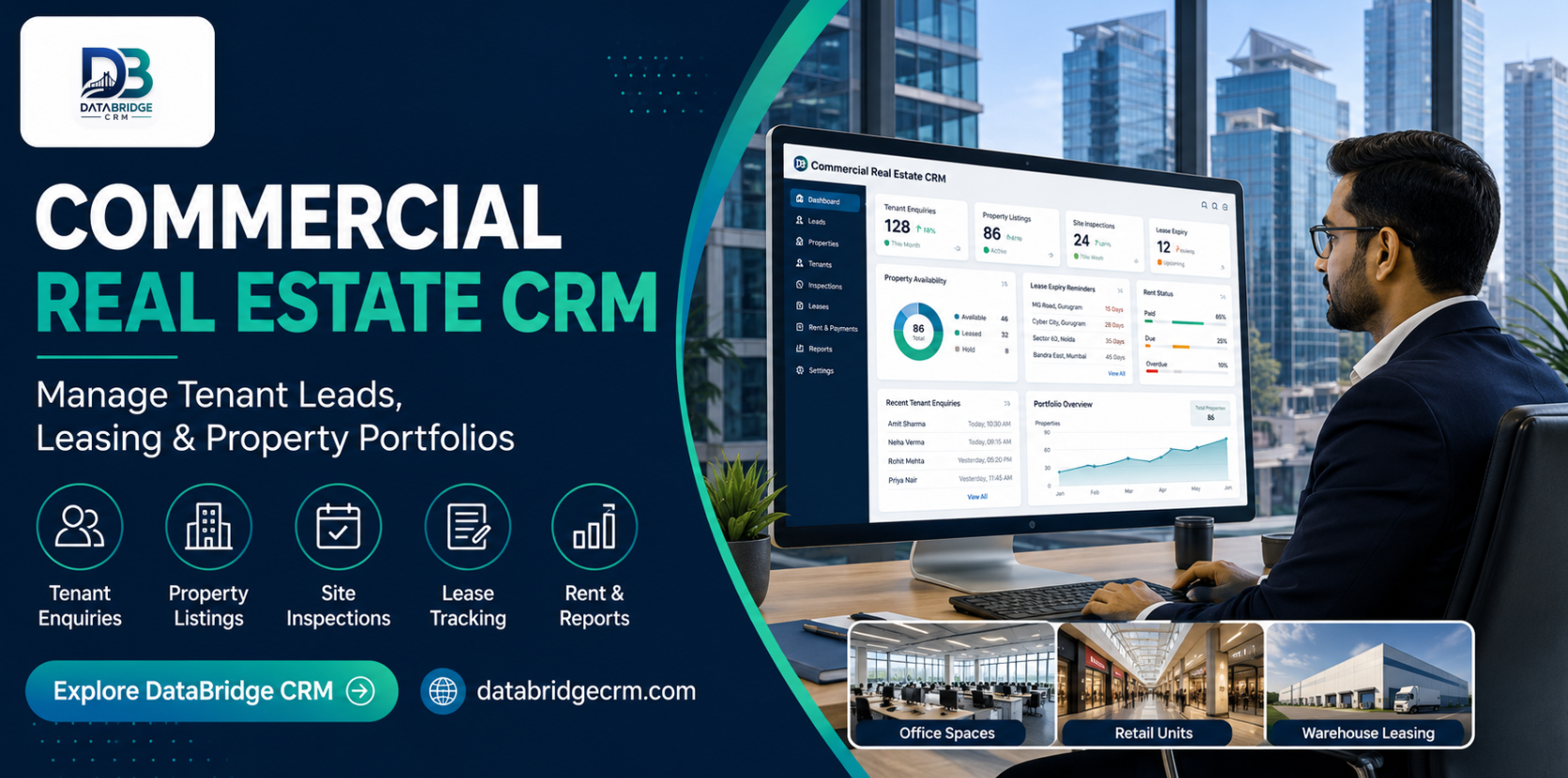
Commercial Real Estate CRM: Manage Tenant Enquiries, Property Listings and Leasing Operations
Commercial real estate businesses deal with more than buying and selling properties. They manage office spaces, retail outlets, warehouses, commercial buildings and long-term rental agreements. Each property involves different tenants, landlords, payment schedules, maintenance requirements and documentation.
As a property portfolio grows, managing these activities through spreadsheets, phone calls and WhatsApp conversations becomes difficult.
A commercial property manager may receive enquiries from multiple businesses, arrange property inspections, discuss rental terms, coordinate agreements and monitor payments. Without an organized system, important information can easily get missed.
This is where a Commercial Real Estate CRM becomes useful. It provides a structured way to manage property information, tenant relationships, rental activities and business records.
1. What Is Commercial Real Estate CRM Software?
Commercial Real Estate CRM software is a business management solution designed to organize property-related information and customer relationships.
It helps property businesses maintain records of:
- Commercial properties and available spaces.
- Property owners and landlords.
- Existing and prospective tenants.
- Rental agreements and documentation.
- Rent payments and outstanding amounts.
- Property-related income and expenses.
- Staff responsibilities and communication.
Instead of maintaining separate spreadsheets for every building, a centralized CRM helps businesses access important information from one place.
For example, a commercial property company managing five office buildings can organize property details, landlord information, tenant records and rental transactions without maintaining multiple disconnected files.
2. Why Commercial Property Businesses Need a CRM
Commercial property management involves several responsibilities that continue even after a tenant occupies a space.
Managing Multiple Properties
Property managers may handle office buildings, shopping complexes, retail spaces and warehouses simultaneously.
Without organized property records, finding availability, ownership information and tenant details becomes time-consuming. A property management CRM can help maintain a centralized property database.
Tracking Tenant Enquiries
Businesses looking for commercial spaces usually have specific requirements, including:
- Required floor area.
- Preferred business location.
- Monthly rental budget.
- Parking availability.
- Property type.
- Expected possession date.
Recording these requirements helps property teams understand what each prospective tenant is looking for.
Monitoring Rental Payments
Rental payments are recurring financial activities. Property managers need to know which tenants have paid, which payments are pending and which agreements are approaching their renewal dates.
A structured rent tracking system helps maintain better financial visibility.
Organizing Lease Documentation
Commercial property businesses handle rental agreements, tenant KYC documents, property records and financial information. Keeping these documents organized makes it easier to retrieve important records when required.
3. Important Features of Commercial Real Estate CRM
Choosing the right property management software requires understanding the daily activities it needs to support.
Property Portfolio Management
A commercial real estate CRM should help maintain records of multiple properties.
- Property name and address.
- Property category.
- Landlord details.
- Tenant information.
- Rental details.
- Property status.
This is useful for businesses managing office spaces, retail units and industrial properties.
Tenant and Landlord Management
Tenant and landlord relationships require regular communication. A CRM can help businesses maintain contact information, tenancy records, lease details and communication history.
For example, when a tenant contacts the property management team regarding a rental agreement, staff can refer to the existing tenant record instead of searching through old messages.
Rent Tracking and Payment Management
Rental income is an important part of commercial property operations. A rent management system can help organize monthly invoices, pending payments, transaction records and payment history.
It also makes it easier to identify outstanding rental amounts.
Lease Expiry Notifications
Lease renewals require timely communication between tenants and property owners. Missing an important renewal date can create unnecessary operational problems.
Automated reminders help property managers monitor upcoming lease expirations and plan communication in advance.
Income and Expense Management
Commercial property businesses need visibility into their financial activities.
- Rental income.
- Maintenance expenses.
- Property-related transactions.
- Refunds.
- Landlord payouts.
- Financial reports.
These records help business owners understand property-level financial activity.
4. How Different Commercial Property Businesses Can Benefit
Not every real estate company follows the same workflow. A CRM should support the operational requirements of the business.
| Business Type | Important Requirements |
|---|---|
| Office Space Providers | Tenant records and lease tracking |
| Shopping Complexes | Retail tenant and rental management |
| Warehouse Leasing | Property and tenant records |
| Co-working Spaces | Space and customer management |
| Commercial Landlords | Rent and financial tracking |
| Property Management Firms | Multi-property administration |
| Industrial Property Consultants | Property enquiry organization |
Example: Commercial Office Leasing
Imagine a company managing three commercial office buildings.
A prospective tenant enquires about office space for a 30-person team. The property manager records the enquiry, discusses the rental requirements and maintains the relevant property and tenant information.
Once the tenant finalizes the space, the business can maintain its tenancy records, agreement details and payment information.
A CRM helps organize these activities and gives the management team better visibility.
5. Why Spreadsheets Are Not Always Enough
Spreadsheets are useful when a business manages a limited number of properties. However, as operations expand, separate spreadsheets can create problems.
- Duplicate tenant records.
- Outdated property information.
- Missed rental reminders.
- Difficulty tracking payment history.
- Disorganized documentation.
- Limited visibility into team responsibilities.
Commercial property management software provides a more structured environment for organizing these activities.
The objective is not simply to replace Excel. It is to make property information easier to maintain, retrieve and use.
6. How DataBridge CRM Supports Property Management
DataBridge CRM offers a dedicated Property Management CRM solution for managing properties, landlords, tenants, rent collections and accounting activities.
According to its official website, the platform includes property management modules such as:
- Property and property-type records.
- Landlord and tenant management.
- Rent tracking.
- Payment and transaction records.
- Income and expense management.
- Tenant portal and lease documentation.
- KYC document records.
- Staff management.
- Roles and permissions.
- Reports and notifications.
Its property management workflow covers four main stages:
- List Properties: Maintain property and landlord information.
- Onboard Tenants: Organize tenant profiles, agreements and KYC documents.
- Track Rents: Monitor rental invoices and outstanding payments.
- Financial Control: Record expenses, landlord payouts and financial reports.
Businesses can explore the solution here:
Explore DataBridge Property Management CRM
7. Benefits for Small, Medium and Large Property Businesses
Small Property Businesses
Independent landlords and small property managers can organize tenant information, rent payments and property documentation.
Medium-Sized Real Estate Companies
Businesses handling multiple commercial spaces can maintain more consistent property and tenant records.
Large Property Management Companies
Larger teams can benefit from structured staff responsibilities, centralized information and better visibility into financial activities.
The right solution depends on the number of properties, tenant volume and internal workflows.
8. How to Choose the Right Commercial Property Management CRM
Before selecting software, evaluate the following factors:
1. Property Management Requirements
Check whether the system supports the property types and business activities you actually manage.
2. Tenant Management
Ensure that tenant details, communication records and agreements can be organized properly.
3. Rental Tracking
Review how the system handles rent records, pending payments and reminders.
4. Document Management
Check how agreements and KYC documents are stored and retrieved.
5. Financial Reporting
Understand whether income, expenses and transactions can be monitored conveniently.
6. User Permissions
Different employees may need different levels of access to property and financial records.
7. Ease of Use
Choose a platform that your property managers and administrative staff can use comfortably.
8. Product Demonstration
Request a demonstration using workflows similar to your actual business operations.
9. The Future of Commercial Property Management
Commercial real estate businesses are increasingly looking for organized digital processes.
Property databases, tenant management systems, digital documentation and financial tracking can help reduce dependence on scattered records.
However, technology alone cannot replace good property management practices. Businesses still need clear rental policies, accurate documentation, timely communication and responsible financial management.
A suitable CRM brings these activities into a more organized working environment.
Conclusion
Managing commercial properties requires consistent attention to tenant relationships, property records, rental collections and documentation.
As portfolios grow, manual processes become harder to maintain.
A Commercial Real Estate CRM can help property managers organize their operations, improve information accessibility and maintain better visibility into tenant and financial activities.
DataBridge CRM offers a dedicated Property Management CRM solution that businesses can explore for managing properties, landlords, tenants, rent tracking and financial records.
For commercial property businesses looking to organize their daily operations, choosing the right property management software can be a practical step towards more structured business management.
Frequently Asked Questions (FAQs)
1. What is a Commercial Real Estate CRM?
A Commercial Real Estate CRM is software that helps property businesses organize property records, tenant information, landlord details, rental activities and customer relationships.
2. Can a real estate CRM manage multiple commercial properties?
Yes. A suitable property management CRM can maintain records for multiple buildings, office spaces, retail properties and other commercial assets.
3. Can property management software track rental payments?
Yes. Depending on the software, it can organize rent invoices, payment records, outstanding amounts and rental reminders.
4. Is commercial real estate CRM useful for warehouse leasing companies?
Yes. It can help organize warehouse property information, landlord records, tenant details, rental agreements and financial activities.
5. Where can I find commercial property management software in Jaipur?
Businesses can explore DataBridge CRM's Property Management CRM solution through its official website.
Organize Your Commercial Property Business with DataBridge CRM
Manage properties, tenants, rental payments, documentation and financial records through a dedicated property management solution.
Explore Property Management CRM
#DataBridgeCRM #CommercialRealEstate #PropertyManagement #RealEstateCRM #BusinessAutomation
Commercial Real Estate CRM, Property Management CRM, Tenant Management, Lease Management, Commercial Leasing, Property Portfolio Management, Real Estate Automation, DataBridge CRM.

